
Graffiti gets misunderstood. People see vandalism. What graffiti writers in hip hop culture see is something entirely different: a visual language, a way of marking territory, of asserting identity, of putting something into public space that speaks, provokes, and belongs to the community that created it. Every graffiti artist develops their own style—their signature, their voice in color and form. And when you understand it through that lens, you start to see it everywhere in good facilitation work.
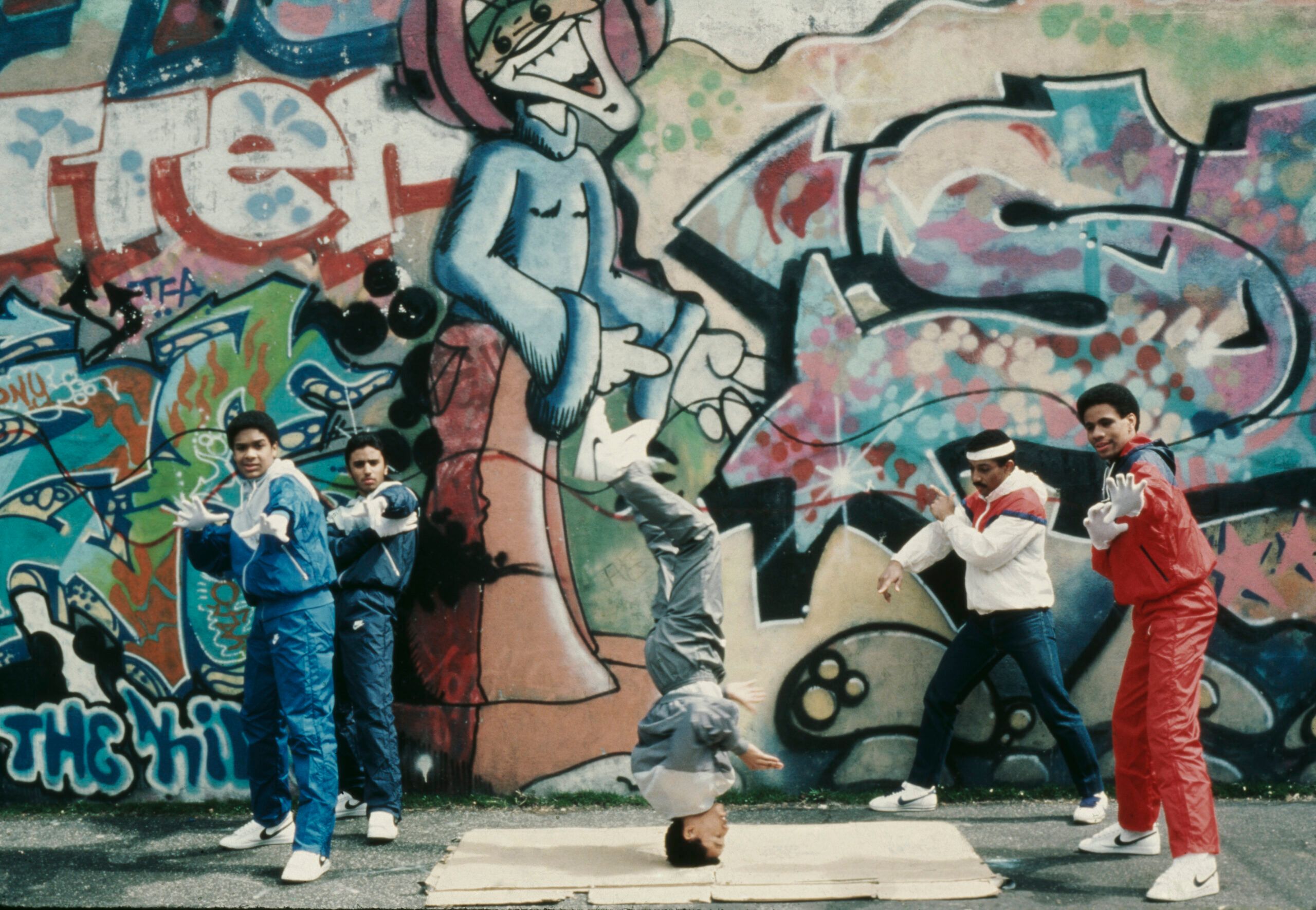
The Room Is a Canvas
Before participants arrive to a workshop or training, a facilitator has already been at work. The room has been transformed. Flip charts are up on the walls. Names are written in big, colorful letters. Images representing key concepts are posted around the space. Maybe there are contributions participants shared in a pre-workshop survey, already captured and displayed so people walk in and see their own thinking reflected back at them.
This matters enormously. A generic conference room in a hotel or an office building is just a room. But when a workshop is taking place in it, it becomes something else entirely. It becomes a territory—designed intentionally for this specific group, in this specific moment, for this specific purpose. In education, we talk about the classroom as the third teacher. The first teacher is the facilitator. The second is the other participants. The third is the space itself. And a skilled facilitator knows how to make that third teacher work.
That’s graffiti work. Marking the territory. Claiming the space and transforming it into something that says: this place was made for you.
Flip Charting Is an Art Form
There’s a craft to capturing what someone says on a flip chart in real time. It’s not just transcription. It’s interpretation, distillation, and visual presentation all at once. Which words do you use to honor what someone just shared? How big do you write? What color? Where on the page? Do you use an image or a symbol to anchor the idea visually?
Experienced facilitators develop their own style. Their own handwriting. Their own way of using headers and bullets and drawings. If you’ve worked with multiple facilitators and walked into a room where they’ve each been flip charting, you can often tell who made which chart just by looking. There’s a signature there—an identity expressed through the visual work on the wall.
That’s what graffiti writers talk about when they talk about developing your style. It’s not just technique. It’s the visual expression of who you are.
Turning Participants Into Artists
Here’s where it gets really powerful. The best facilitation doesn’t just involve the facilitator making marks on the wall. It turns participants into artists too.
In one leadership training I facilitated, at the close of the program, I asked each participant to create a drawing—images only, no words—representing what success would look like when they applied their new leadership skills back in their real context. Their own metaphors. Their own imagination. Their own style of drawing, whatever that was. The results were extraordinary. Not because they were technically impressive drawings, but because each one was completely and authentically that person’s vision.
In another program focused on leading in fragile, conflict, and violence-affected environments, small groups worked together to create visual representations—again, images only—of what leading in those contexts looks and feels like. Then we did a gallery walk. Other participants moved around the room, studied each group’s work, and interpreted what they thought it was communicating—before the group who made it shared their actual intention. The conversation that came out of that gap between interpretation and intention was some of the richest learning of the entire program.
And those posters stayed up on the walls for the rest of the workshop. They became part of the territory. They were constant visual reminders of the lived experience and wisdom that participants had brought into the room.
The Space Becomes Theirs
This is the arc that graffiti teaches us. You start with a blank wall. Over the course of a workshop or training—be it one day, three days, a week—that wall fills up. With the facilitator’s flip charts, yes, but more importantly with the participants’ own work. Their handwriting. Their drawings. Their ideas made visible.
By the end, they look around the room and they see themselves everywhere. They see their voice on the wall. They see their group’s work. They see evidence of what they’ve created together. The room is no longer just a room. It’s their territory. They marked it. And that sense of ownership over the space is deeply connected to ownership over the learning itself.
Introduction: Hip Hop and Facilitation
Element 2 – B-boying and B-girling
Element 3: Graffitti
Element 4: DJing (turntabling)
 Daryn R. Cambridge