
There’s a question I get asked a lot in my work as a facilitator: where did you learn to do this? And I usually talk about training programs, mentors, years of practice in rooms with groups of people trying to learn something together. But honestly? Some of my deepest intuitions about facilitation come from a place most people wouldn’t expect: hip hop.
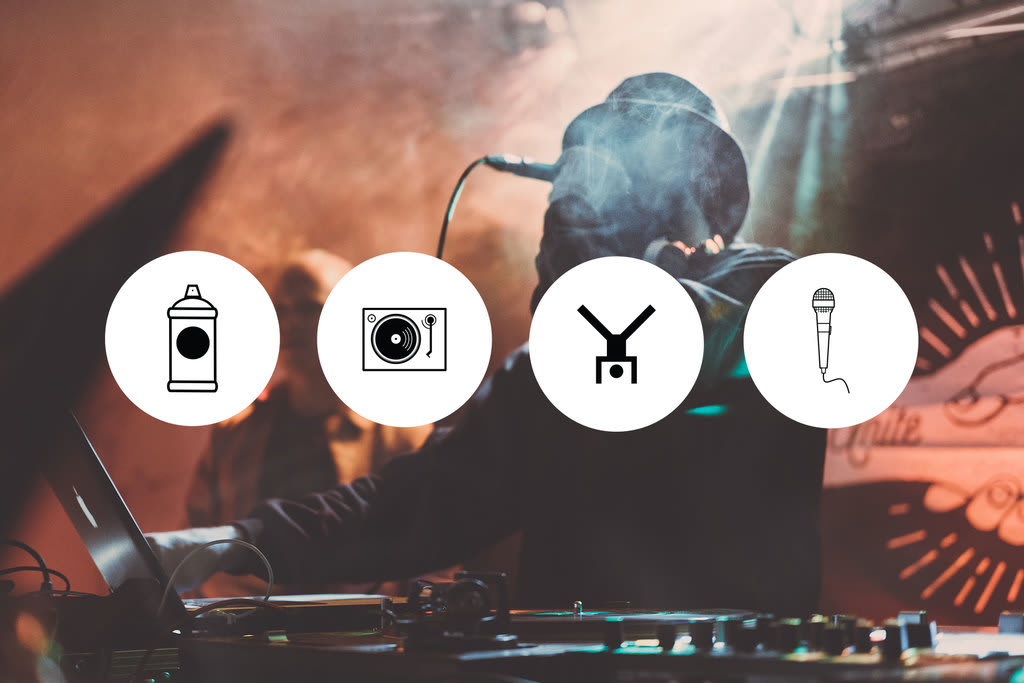
Not hip hop as background music. Not hip hop as a reference point to seem culturally relevant in a workshop. I’m talking about hip hop as a framework – a set of principles, practices, and values that map onto the craft of facilitation in ways that are too precise to ignore.
Hip hop has four core elements:
- Element 1: MCing (rapping)
- Element 2: B-boying and B-girling (breakdancing)
- Element 3: Graffiti writing
- Element 4: DJing (turntablism)
Each one is a distinct art form with its own technical demands, its own culture, its own vocabulary. And each one, when you look closely, contains lessons about what it means to hold space for a group of people, help them learn, and create an experience that stays with them long after they’ve left the room.
This is the first in a series of four pieces where I’ll explore each element and what it can teach us about facilitation. But before we get there, let me explain why I think this connection matters.
Facilitation is often misunderstood. Some people think it’s about standing at the front of a room and delivering content. It’s not. Facilitation is about creating the conditions for people to learn, connect, and do something meaningful together. It requires presence, artistry, improvisation, and a deep sensitivity to the energy of a room. It requires you to read people, respond in real time, hold structure and let go of it at the same time. It requires you to know when to step in and when to step back.
Sound familiar? It should. Because that’s exactly what an MC does when they command a stage. It’s what a b-boy or b-girl does when they step into a cypher. It’s what a graffiti artist does when they transform a blank wall into a conversation. It’s what a DJ does when they read a crowd and take them on a journey.
Hip hop, in many ways, is about showing up fully, reading the room, and creating something in the moment that is both technically skilled and deeply human. So is facilitation.
Over the next four pieces, I want to invite you, whether you’re a seasoned facilitator or someone just starting out, to look at your craft through a different lens. Not because hip hop has all the answers, but because sometimes the most useful insights come from the places we least expect them.
Introduction: Hip Hop and Facilitation
 Daryn R. Cambridge