
When an MC steps up to the mic, their job is clear: get everyone in that room engaged, energized, and connected to what’s happening in this moment. They’re not just performing. They’re creating a container. They’re weaving a narrative. They’re reading the crowd and responding to what they find. And they’re doing all of this while making it look effortless.
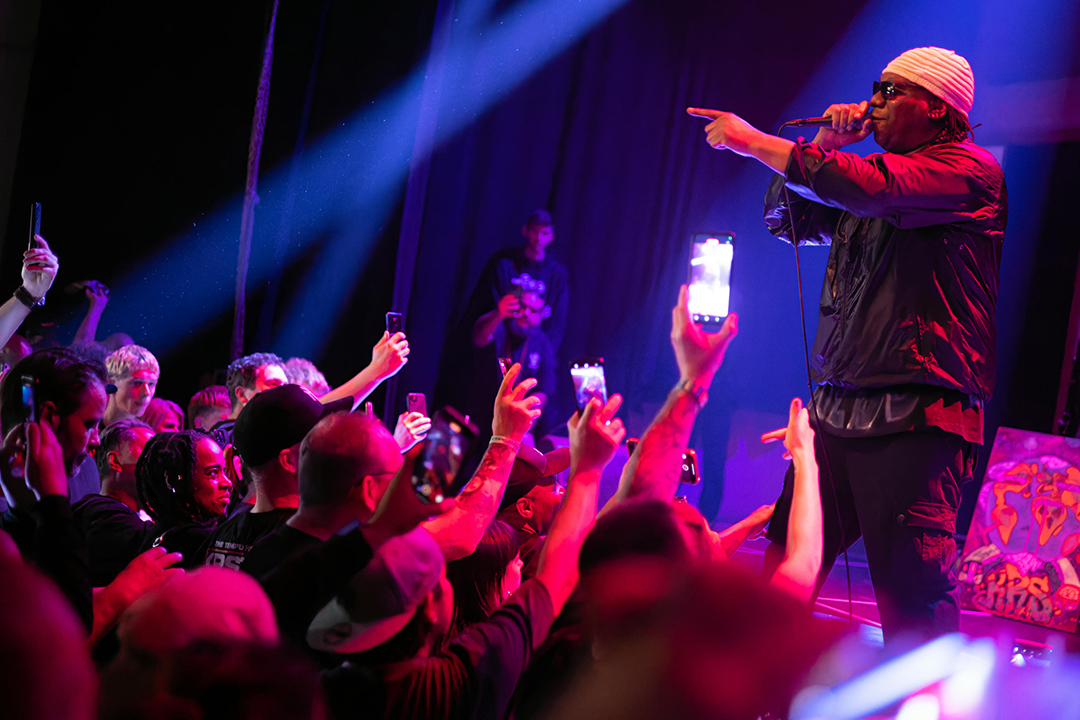
Sound familiar? It should. Because that’s exactly what a facilitator does.
When participants walk into a workshop or training, they’re looking for someone who’s going to provide structure and guidance, but not in a way that feels rigid or top-down. They want to feel energized. They want to feel like they know what they’re supposed to be doing. They want to feel like they’re part of something collective, not just sitting in a room waiting to be talked at.
That’s the MC’s job. And it’s the facilitator’s job too.
Weaving the Narrative
One of the things I love most about the MC as a pillar of hip hop is the role of storytelling. A great MC isn’t just stringing words together, they’re building a narrative arc, taking the audience somewhere, making sure that by the time they’re done, people feel like they experienced something whole and complete.
Facilitation works the same way. Whether participants know it or not, a facilitator is weaving a narrative across the entire learning experience. Every activity, every discussion, every moment of reflection is a thread in a larger story. And at the end, whether that’s a one-day workshop or a two-week leadership program, participants should be able to look back and say: we just went on a journey together, and here’s what we made.
One of the ways I do this in my own work is by inviting participants to literally create a collective story at the end of an experience. We reflect together on what we went through, what we built, what we learned—and we construct a shared narrative out of it. That’s the MC’s gift, brought into the learning space.
Clear Instructions That Land
An MC also knows how to give instructions – how to direct a crowd, how to get people to move or respond or participate – in a way that reaches everyone in the room. Not just the people in the front row. Everyone. And that requires attention to language, yes, but also to pacing, tone, and volume.
Facilitators do the same thing. Giving clear instructions is one of the most underrated facilitation skills. It’s not just about what you say; it’s about how you say it, how slowly you pace it, when you pause, how you calibrate your voice for a room of ten versus a room of a hundred. An instruction that lands with clarity and confidence sets the entire activity up for success. An instruction that’s rushed or muddled creates confusion and anxiety before anyone’s even begun.
Reading the Room
A great MC is also a great reader of energy. They know the crowd is going to feel different at 8pm than at midnight. They know when something is landing and when it’s falling flat. And they adjust, in real time, without the audience ever knowing they’re doing it.
This is one of the most essential facilitation skills there is. The energy in a room at the start of a training is different from the energy after lunch. It’s different on day one versus day three. A facilitator has to sense those shifts and respond—leaning into what’s working, pulling back from what isn’t, making calls in the moment about what the group needs right now.
Holding Space Without Crowding It
Here’s the thing about a great MC that I think gets overlooked: they’re not the star of the show. Their job is to hype other people up. To create the conditions for the crowd, or the performers, or the participants, to shine. A bad MC crowds the space with their own voice and presence. A great MC knows when to step forward and when to step back.
The same is true for facilitation. In an ideal session, a facilitator is so good at setting up an activity that participants know exactly what to do, how to do it, and why it matters. And they can run with it with minimal intervention. If the room is buzzing and people are learning and connecting and creating, the facilitator’s job is often just to get out of the way.
That’s not passivity. That’s mastery. The MC knows it. And so does the facilitator.
Introduction: Hip Hop and Facilitation
 Daryn R. Cambridge