
Step into a cypher and watch a b-boy or b-girl work, and you’ll see something that looks like pure spontaneity. They’re spinning, freezing, launching into footwork, responding to the music, to the energy of the crowd, to whatever the last dancer just did. It looks free. It looks improvised.
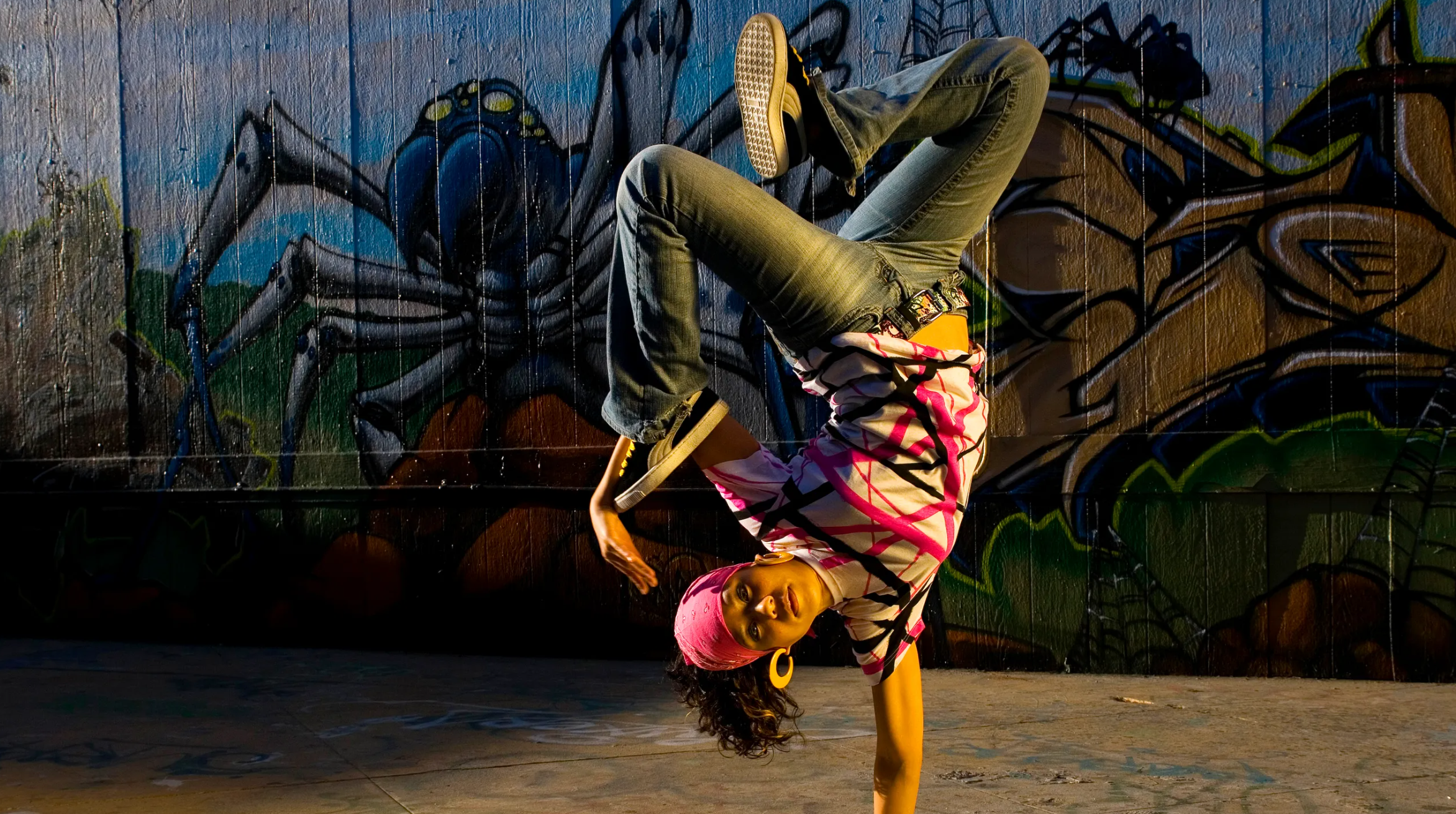
And it is. But it’s also built on a foundation of deeply practiced, rigorously developed moves.
That tension, between structure and freedom, between the learned and the spontaneous, is at the heart of breakdancing. And it’s at the heart of facilitation too.
The Vocabulary of Moves
Every b-boy and b-girl develops a vocabulary of moves. Foundational techniques that they’ve drilled until they’re muscle memory. Freezes, top rocks, power moves; each one is a tool, available to be deployed in the right moment. The mastery of those fundamentals is exactly what makes improvisation possible. You can’t freestyle with what you don’t know.
Facilitators have a vocabulary of moves too. Think about the sticky note activity – participants write their individual thoughts in silence, place them on the wall, read what others have shared, and together find the themes that emerge. Or the think-pair-share: a prompt goes out to the group, people think on their own, discuss with a partner, then share with the room. Or the human spectrum, where participants physically move to different parts of the room to represent where they stand on a question or statement.
Each of these is a move. Technically learned, practiced over time, available to deploy. And just like in breakdancing, knowing your moves deeply is what gives you the freedom to improvise with them.
Reading and Responding
In a cypher, you’re not performing in isolation. You’re in conversation. One dancer moves, others watch, and the next person responds, building on what just happened, taking it somewhere new. It’s call and response, expressed through the body.
Facilitation works the same way. You’re constantly reading the room, sensing what’s landing, noticing where energy is rising or dropping. And then you’re responding, not just executing a pre-planned sequence, but actually adapting based on what the group is giving you. If something is resonating deeply, you lean in. If something is losing people, you adjust.
This is especially alive when you’re co-facilitating. I’ve been in sessions where my co-facilitator did something that landed so powerfully with participants that it ran longer than planned, and when it was my time to jump in I had thirty minutes instead of forty-five for what came next. The cypher moved differently than I expected. So I adapted: honored what just happened, adjusted my moves, and worked within the new timing. The participants never knew what I’d planned. They only experienced what actually unfolded.
Risk and Vulnerability
Here’s something that doesn’t get talked about enough in facilitation: the risk. B-boys and b-girls put their bodies on the line. They might fall. They might attempt a move that doesn’t land…in front of everyone. That’s part of the culture. You take the risk, you might fail, and you keep going.
Facilitators take risks too. We ask participants to do things they’ve never done in front of a group – to be vulnerable, to share something real, to step outside their comfort zone and into their growth zone. And we can’t ask that of participants if we’re not willing to model it ourselves.
Sometimes that means going first. If I’m asking a group to answer a vulnerable question in an icebreaker, I might answer it first, openly and honestly, so people can see what that looks and sounds like and feel safer doing it themselves. If I’m asking people to get up and move or be a little silly, I might do it first, with confidence, so the permission is clear.
A facilitator who only asks others to take risks while staying safely behind their own comfort zone isn’t really facilitating. They’re managing. There’s a difference.
The Plan You’re Willing to Let Go Of
One of my favorite things about the breakdancing cypher is this: you don’t know what the other person planned. You only know what they did. And what they did might have been completely different from what they intended.
That’s one of the great freedoms of facilitation. You’re often the only one who knows what you planned to do. Participants know the objectives, they know the general shape of the experience, but the specific sequence of moves? That’s yours. Which means you have enormous freedom to adapt, to drop things, to change course entirely and participants will never know. They only experience what actually happens.
That’s not permission to be underprepared. It’s permission to hold your plan lightly. To plan thoroughly and then be willing to let it go the moment something better emerges. The best facilitators I know carry their session plan in their back pocket, not in their hands.
Introduction: Hip Hop and Facilitation
 Daryn R. Cambridge