Tag Archives: Hip Hop

Hip Hop and Facilitation: DJing – Curation, Flow, and the Breakbeats of Learning

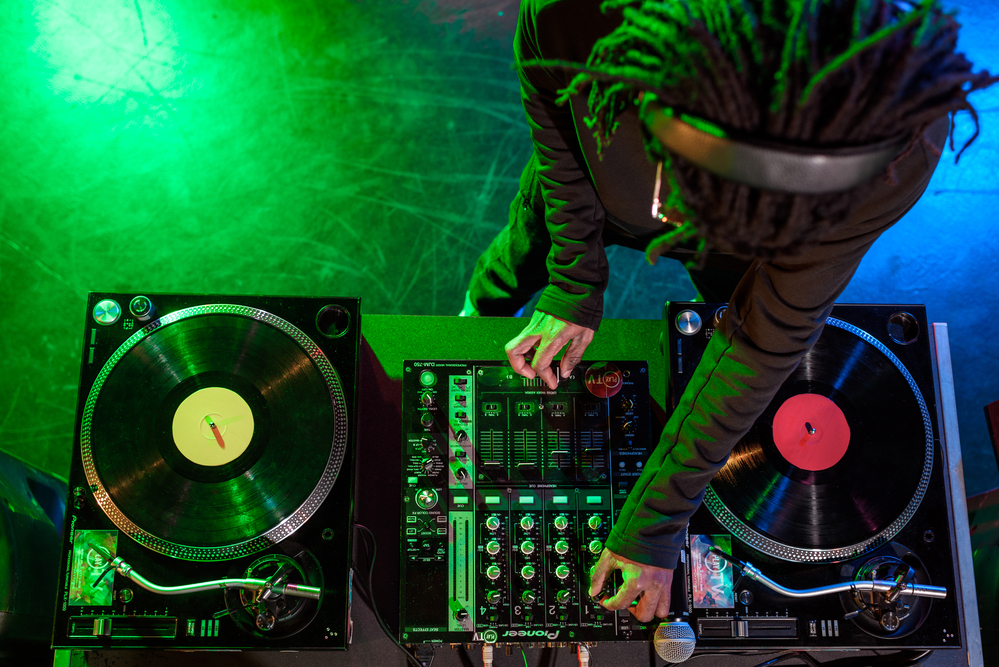
I’ve always thought of myself as an educational DJ. It’s the metaphor that, more than any other, captures what I actually do as a facilitator. Because at the end of the day, a DJ’s job is to create an experience where people are moved, literally, physically, emotionally moved. And a facilitator’s job is to create an experience where people are moved to learn. The skills required to do both of those things well are remarkably, almost uncannily, similar.
Curation Over Content Expertise

A DJ doesn’t need to have written every song they play. They don’t need to be a musician or a composer. What they need is taste, knowledge of their audience, and the skill to blend and sequence what already exists into something that works for the room in front of them.

Read more: Hip Hop and Facilitation: DJing – Curation, Flow, and the Breakbeats of Learning

Facilitators work the same way. We are frequently brought in to design and facilitate learning experiences on technical subjects where we are not the subject matter expert. We work alongside people who know the content deeply—seasoned practitioners, technical specialists, experienced leaders in their field. Our job is not to know what they know. Our job is to translate their expertise into a learning experience.

That means understanding the audience. What do they already know? What’s relevant to their actual work? What will land with urgency for them and what will fall flat? And then it means taking the subject matter expert’s content and asking: how do we transform this from a lecture or a manual into something people actually experience, engage with, and retain?

Just as a DJ asks: what is the vibe for this event? What genres and artists will resonate with this particular crowd? And then: how do I sequence and mix those tracks to create the experience we’re going for?

Reading the Room and Adjusting the Set

A DJ who ignores the dance floor isn’t doing their job. If people aren’t moving, you read that. You adjust. You transition to something different. You trust your instincts about what this crowd needs in this moment, even if it’s not what you had planned.

In facilitation, we call this reading the room. And it’s one of the most important skills we have. Energy at the start of a workshop is different from energy after lunch. Energy on day one is different from energy on day three. A facilitator who runs the same way through their agenda regardless of what the group is actually experiencing isn’t facilitating—they’re just presenting.

Reading the room means noticing when an activity is landing and leaning into it, giving it more time, letting it breathe. It means noticing when something isn’t working—when the energy has gone flat, when people look confused or disengaged—and being willing to cut it, modify it, or transition into something else entirely. Just like a DJ who smoothly moves from a track that’s clearing the dance floor to one that brings people back in.

The Break Beat: Rhythm, Ritual, and Return

One of the most foundational innovations in hip hop DJing was the break beat—isolating the percussion break in a song and extending it, looping it, creating a space for dancers to really go. It became the rhythmic foundation, the thing people could lock onto and return to.

In facilitation, we need break beats too. We need rhythm and ritual built into the learning experience—recurring structures that participants can anchor themselves to. Something that says: we’ve been here before, we know this move, we do this together. It creates safety. It creates coherence. It gives people a moment to reconnect as a group before heading back out into new territory.

That might be a daily opening check-in. It might be a consistent closing reflection at the end of each session. It might be a physical warm-up ritual that the group does together before diving back into content. Whatever form it takes, the break beat in facilitation is the thing that brings people home before sending them somewhere new.

Flow, Transitions, and the Arc of the Set

A great DJ set has an arc. There’s an opening that sets the tone and draws people in. There’s a building of momentum through the middle. There’s a peak—that moment where the energy is at its highest and the room is fully alive. And then there’s a winding down, a return to something more reflective, a close that honors the journey people just took together.

Facilitation has the same arc. The opening is not just logistics—it’s establishing tone, creating safety, signaling to participants what kind of experience this is going to be. The transitions between activities matter enormously; a jarring shift can break the energy and trust you’ve been building. The peak might be a powerful activity, a moment of real collective insight, a conversation that goes deeper than anyone expected. And the close is never just a summary—it’s an invitation to integrate what happened, to carry something forward.

I’ve even learned to use music literally in my facilitation work—playing something upbeat to signal that it’s time to reconvene after a break, or something quieter and reflective to help the group settle into a more introspective activity. The sonic environment is part of the facilitation. The DJ in me knows that what people hear shapes how they feel, and how they feel shapes how they learn.

In Service of the Experience

Here’s the thing about DJs that I think gets overlooked: they are completely in service of the crowd’s experience. The best DJs disappear into the music. You’re not watching them—you’re dancing. You’re not thinking about their technique—you’re feeling the music.

That’s the aspiration for facilitation too. The best workshops I’ve been part of—either as a facilitator or a participant—are ones where the facilitation becomes invisible. Where people are so engaged in the learning, so connected to each other and to the content, that they stop thinking about the person holding the mic or standing at the flip chart. They’re just in it. They’re learning and growing and building something together.

That’s what a great DJ does. That’s what a great facilitator does. And when you get it right, it feels like magic—even though you know it took everything you had to make it look that easy.

Introduction: Hip Hop and Facilitation

Element 1: MCing

Element 2: B-boying and B-girling (breakdancing)

Element 3: Graffitti

Element 4: DJing (turntabling)

Hip Hop and Facilitation: Graffiti Writing and Marking the Territory

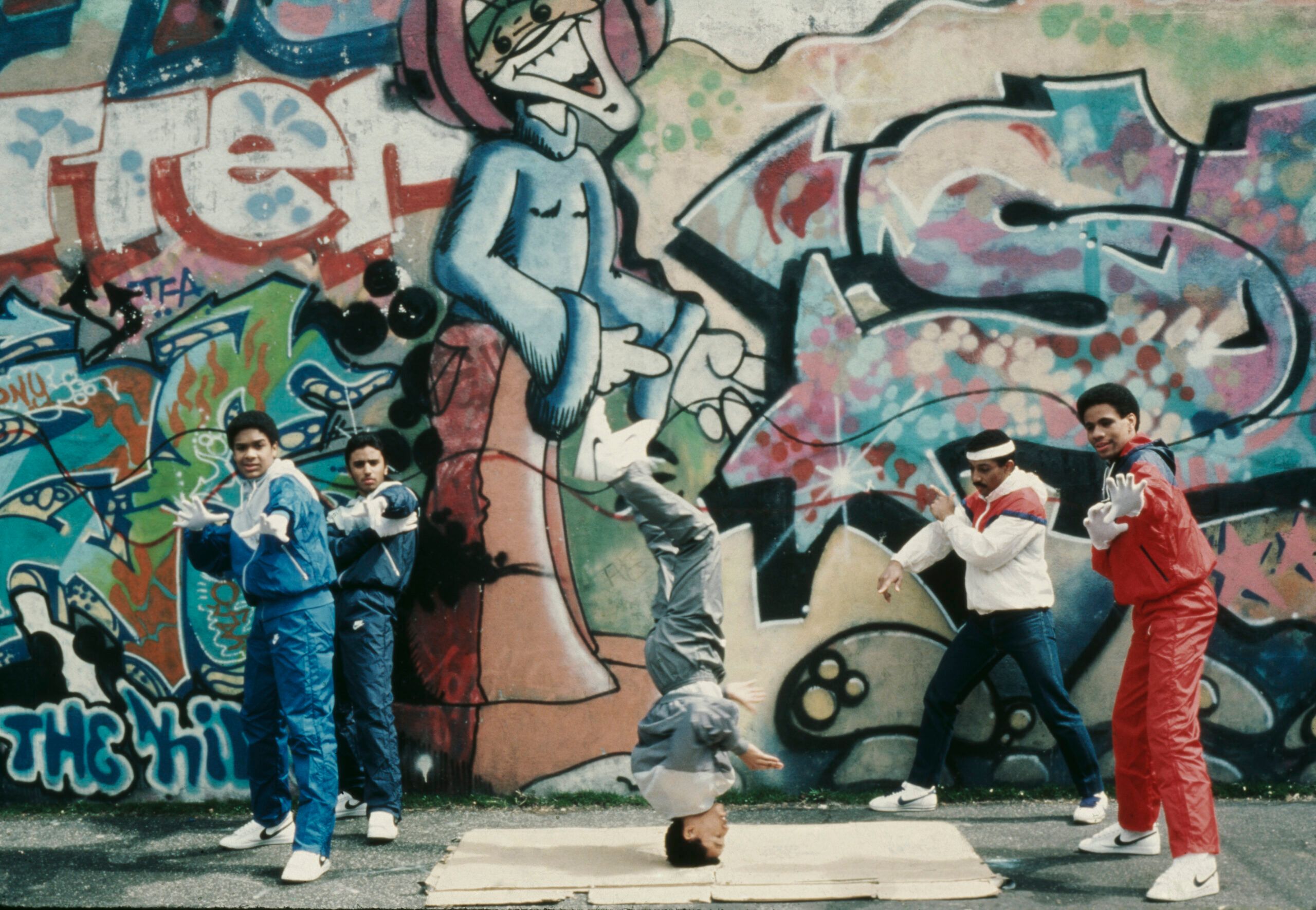
Graffiti gets misunderstood. People see vandalism. What graffiti writers in hip hop culture see is something entirely different: a visual language, a way of marking territory, of asserting identity, of putting something into public space that speaks, provokes, and belongs to the community that created it. Every graffiti artist develops their own style—their signature, their voice in color and form. And when you understand it through that lens, you start to see it everywhere in good facilitation work.

The Room Is a Canvas

Before participants arrive to a workshop or training, a facilitator has already been at work. The room has been transformed. Flip charts are up on the walls. Names are written in big, colorful letters. Images representing key concepts are posted around the space. Maybe there are contributions participants shared in a pre-workshop survey, already captured and displayed so people walk in and see their own thinking reflected back at them.

Read more: Hip Hop and Facilitation: Graffiti Writing and Marking the Territory

This matters enormously. A generic conference room in a hotel or an office building is just a room. But when a workshop is taking place in it, it becomes something else entirely. It becomes a territory—designed intentionally for this specific group, in this specific moment, for this specific purpose. In education, we talk about the classroom as the third teacher. The first teacher is the facilitator. The second is the other participants. The third is the space itself. And a skilled facilitator knows how to make that third teacher work.

That’s graffiti work. Marking the territory. Claiming the space and transforming it into something that says: this place was made for you.

Flip Charting Is an Art Form

There’s a craft to capturing what someone says on a flip chart in real time. It’s not just transcription. It’s interpretation, distillation, and visual presentation all at once. Which words do you use to honor what someone just shared? How big do you write? What color? Where on the page? Do you use an image or a symbol to anchor the idea visually?

Experienced facilitators develop their own style. Their own handwriting. Their own way of using headers and bullets and drawings. If you’ve worked with multiple facilitators and walked into a room where they’ve each been flip charting, you can often tell who made which chart just by looking. There’s a signature there—an identity expressed through the visual work on the wall.

That’s what graffiti writers talk about when they talk about developing your style. It’s not just technique. It’s the visual expression of who you are.

Turning Participants Into Artists

Here’s where it gets really powerful. The best facilitation doesn’t just involve the facilitator making marks on the wall. It turns participants into artists too.

In one leadership training I facilitated, at the close of the program, I asked each participant to create a drawing—images only, no words—representing what success would look like when they applied their new leadership skills back in their real context. Their own metaphors. Their own imagination. Their own style of drawing, whatever that was. The results were extraordinary. Not because they were technically impressive drawings, but because each one was completely and authentically that person’s vision.

In another program focused on leading in fragile, conflict, and violence-affected environments, small groups worked together to create visual representations—again, images only—of what leading in those contexts looks and feels like. Then we did a gallery walk. Other participants moved around the room, studied each group’s work, and interpreted what they thought it was communicating—before the group who made it shared their actual intention. The conversation that came out of that gap between interpretation and intention was some of the richest learning of the entire program.

And those posters stayed up on the walls for the rest of the workshop. They became part of the territory. They were constant visual reminders of the lived experience and wisdom that participants had brought into the room.

The Space Becomes Theirs

This is the arc that graffiti teaches us. You start with a blank wall. Over the course of a workshop or training—be it one day, three days, a week—that wall fills up. With the facilitator’s flip charts, yes, but more importantly with the participants’ own work. Their handwriting. Their drawings. Their ideas made visible.

By the end, they look around the room and they see themselves everywhere. They see their voice on the wall. They see their group’s work. They see evidence of what they’ve created together. The room is no longer just a room. It’s their territory. They marked it. And that sense of ownership over the space is deeply connected to ownership over the learning itself.

Introduction: Hip Hop and Facilitation

Element 1 – The MC

Element 2 – B-boying and B-girling

Element 3: Graffitti

Element 4: DJing (turntabling)

What the Four Elements of Hip Hop Teach Us About Facilitation

There’s a question I get asked a lot in my work as a facilitator: where did you learn to do this? And I usually talk about training programs, mentors, years of practice in rooms with groups of people trying to learn something together. But honestly? Some of my deepest intuitions about facilitation come from a place most people wouldn’t expect: hip hop.

Not hip hop as background music. Not hip hop as a reference point to seem culturally relevant in a workshop. I’m talking about hip hop as a framework—a set of principles, practices, and values that map onto the craft of facilitation in ways that are too precise to ignore.

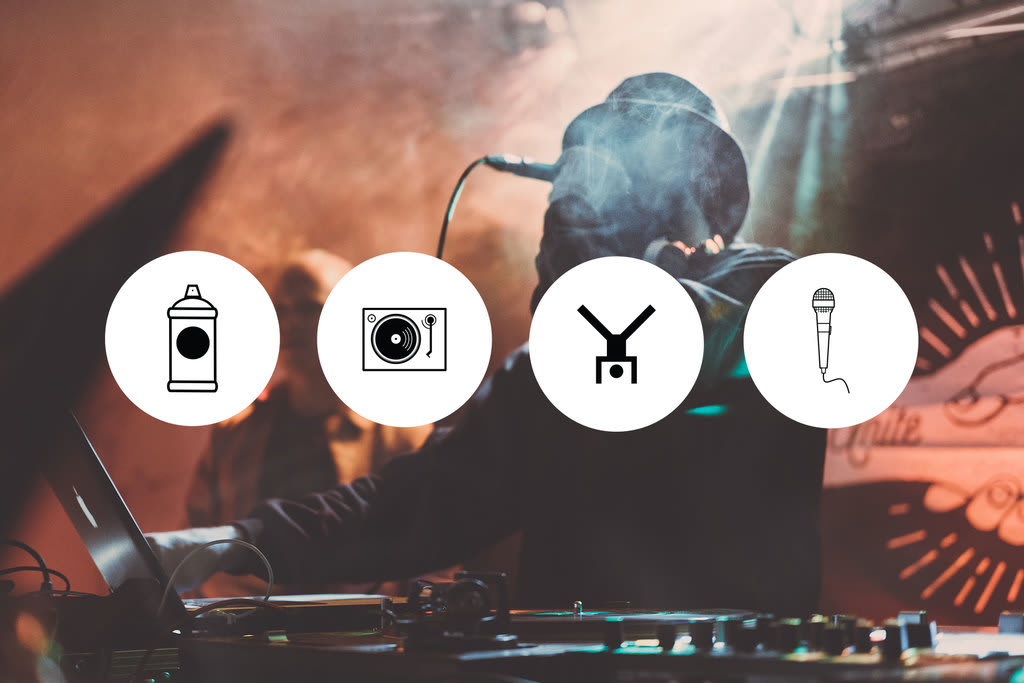
Hip hop has four core elements: emceeing, b-boying and b-girling (breakdancing), graffiti writing, and DJing (turntablism). Each one is a distinct art form with its own technical demands, its own culture, its own vocabulary. And each one, when you look closely, contains lessons about what it means to hold space for a group of people, help them learn, and create an experience that stays with them long after they’ve left the room.

This is the first in a series of four pieces where I’ll explore each pillar and what it can teach us about facilitation. But before we get there, let me explain why I think this connection matters.

Read more: What the Four Elements of Hip Hop Teach Us About Facilitation

Facilitation is often misunderstood. Some people think it’s about standing at the front of a room and delivering content. It’s not. Facilitation is about creating the conditions for people to learn, connect, and do something meaningful together. It requires presence, artistry, improvisation, and a deep sensitivity to the energy of a room. It requires you to read people, respond in real time, hold structure and let go of it at the same time. It requires you to know when to step in and when to step back.

Sound familiar? It should. Because that’s exactly what an MC does when they command a stage. It’s what a b-boy or b-girl does when they step into a cypher. It’s what a graffiti artist does when they transform a blank wall into a conversation. It’s what a DJ does when they read a crowd and take them on a journey.

Hip hop, at its core, is about showing up fully, reading the room, and creating something in the moment that is both technically skilled and deeply human. So is facilitation.

Over the next four pieces, I want to invite you—whether you’re a seasoned facilitator or someone just starting out—to look at your craft through a different lens. Not because hip hop has all the answers, but because sometimes the most useful insights come from the places we least expect them.

Introduction: Hip Hop and Facilitation

Element 1: MCing

Element 2: B-boying and B-girling (breakdancing)

Element 3: Graffitti

Element 4: DJing (turntabling)