Tag Archives: hip-hop

Hip Hop and Facilitation: DJing – Curation, Flow, and the Breakbeats of Learning

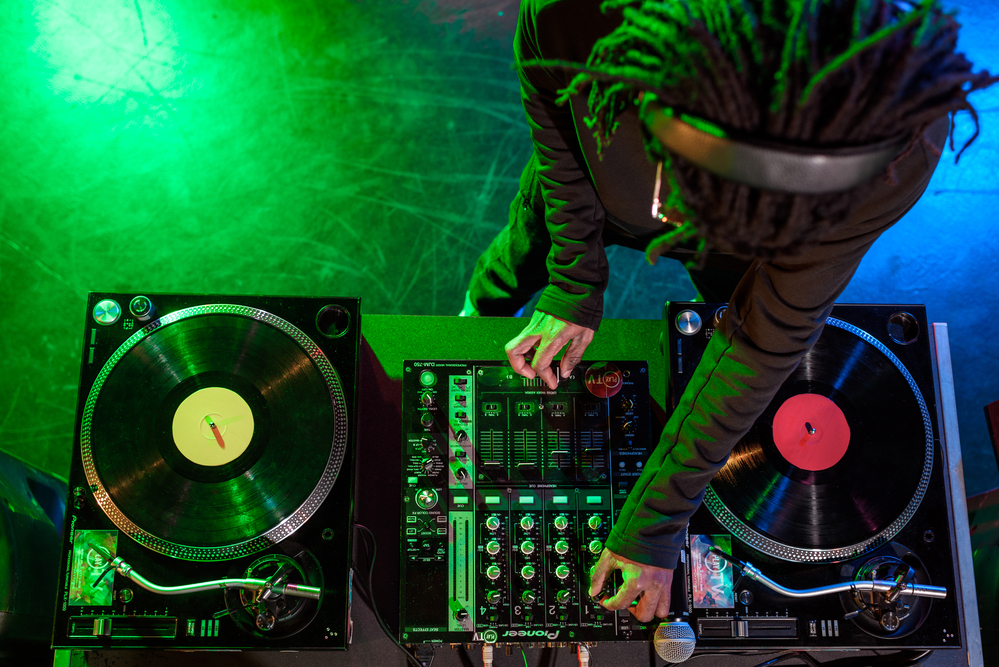
I’ve always thought of myself as an educational DJ. It’s the metaphor that, more than any other, captures what I actually do as a facilitator. Because at the end of the day, a DJ’s job is to create an experience where people are moved, literally, physically, emotionally moved. And a facilitator’s job is to create an experience where people are moved to learn. The skills required to do both of those things well are remarkably, almost uncannily, similar.
Curation Over Content Expertise

A DJ doesn’t need to have written every song they play. They don’t need to be a musician or a composer. What they need is taste, knowledge of their audience, and the skill to blend and sequence what already exists into something that works for the room in front of them.

Read more: Hip Hop and Facilitation: DJing – Curation, Flow, and the Breakbeats of Learning

Facilitators work the same way. We are frequently brought in to design and facilitate learning experiences on technical subjects where we are not the subject matter expert. We work alongside people who know the content deeply—seasoned practitioners, technical specialists, experienced leaders in their field. Our job is not to know what they know. Our job is to translate their expertise into a learning experience.

That means understanding the audience. What do they already know? What’s relevant to their actual work? What will land with urgency for them and what will fall flat? And then it means taking the subject matter expert’s content and asking: how do we transform this from a lecture or a manual into something people actually experience, engage with, and retain?

Just as a DJ asks: what is the vibe for this event? What genres and artists will resonate with this particular crowd? And then: how do I sequence and mix those tracks to create the experience we’re going for?

Reading the Room and Adjusting the Set

A DJ who ignores the dance floor isn’t doing their job. If people aren’t moving, you read that. You adjust. You transition to something different. You trust your instincts about what this crowd needs in this moment, even if it’s not what you had planned.

In facilitation, we call this reading the room. And it’s one of the most important skills we have. Energy at the start of a workshop is different from energy after lunch. Energy on day one is different from energy on day three. A facilitator who runs the same way through their agenda regardless of what the group is actually experiencing isn’t facilitating—they’re just presenting.

Reading the room means noticing when an activity is landing and leaning into it, giving it more time, letting it breathe. It means noticing when something isn’t working—when the energy has gone flat, when people look confused or disengaged—and being willing to cut it, modify it, or transition into something else entirely. Just like a DJ who smoothly moves from a track that’s clearing the dance floor to one that brings people back in.

The Break Beat: Rhythm, Ritual, and Return

One of the most foundational innovations in hip hop DJing was the break beat—isolating the percussion break in a song and extending it, looping it, creating a space for dancers to really go. It became the rhythmic foundation, the thing people could lock onto and return to.

In facilitation, we need break beats too. We need rhythm and ritual built into the learning experience—recurring structures that participants can anchor themselves to. Something that says: we’ve been here before, we know this move, we do this together. It creates safety. It creates coherence. It gives people a moment to reconnect as a group before heading back out into new territory.

That might be a daily opening check-in. It might be a consistent closing reflection at the end of each session. It might be a physical warm-up ritual that the group does together before diving back into content. Whatever form it takes, the break beat in facilitation is the thing that brings people home before sending them somewhere new.

Flow, Transitions, and the Arc of the Set

A great DJ set has an arc. There’s an opening that sets the tone and draws people in. There’s a building of momentum through the middle. There’s a peak—that moment where the energy is at its highest and the room is fully alive. And then there’s a winding down, a return to something more reflective, a close that honors the journey people just took together.

Facilitation has the same arc. The opening is not just logistics—it’s establishing tone, creating safety, signaling to participants what kind of experience this is going to be. The transitions between activities matter enormously; a jarring shift can break the energy and trust you’ve been building. The peak might be a powerful activity, a moment of real collective insight, a conversation that goes deeper than anyone expected. And the close is never just a summary—it’s an invitation to integrate what happened, to carry something forward.

I’ve even learned to use music literally in my facilitation work—playing something upbeat to signal that it’s time to reconvene after a break, or something quieter and reflective to help the group settle into a more introspective activity. The sonic environment is part of the facilitation. The DJ in me knows that what people hear shapes how they feel, and how they feel shapes how they learn.

In Service of the Experience

Here’s the thing about DJs that I think gets overlooked: they are completely in service of the crowd’s experience. The best DJs disappear into the music. You’re not watching them—you’re dancing. You’re not thinking about their technique—you’re feeling the music.

That’s the aspiration for facilitation too. The best workshops I’ve been part of—either as a facilitator or a participant—are ones where the facilitation becomes invisible. Where people are so engaged in the learning, so connected to each other and to the content, that they stop thinking about the person holding the mic or standing at the flip chart. They’re just in it. They’re learning and growing and building something together.

That’s what a great DJ does. That’s what a great facilitator does. And when you get it right, it feels like magic—even though you know it took everything you had to make it look that easy.

Introduction: Hip Hop and Facilitation

Element 1: MCing

Element 2: B-boying and B-girling (breakdancing)

Element 3: Graffitti

Element 4: DJing (turntabling)

Hip Hop and Facilitation: Graffiti Writing and Marking the Territory

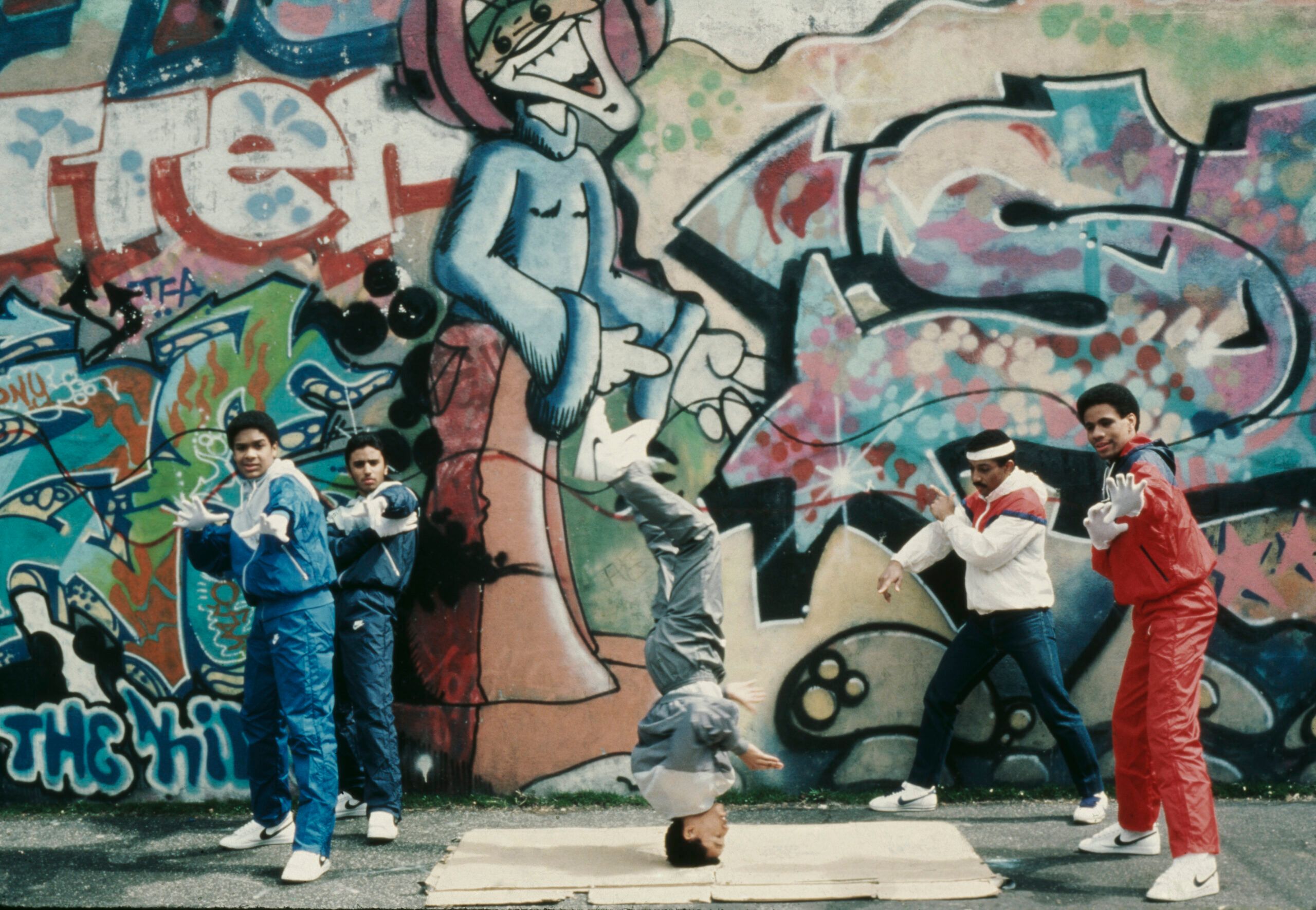
Graffiti gets misunderstood. People see vandalism. What graffiti writers in hip hop culture see is something entirely different: a visual language, a way of marking territory, of asserting identity, of putting something into public space that speaks, provokes, and belongs to the community that created it. Every graffiti artist develops their own style—their signature, their voice in color and form. And when you understand it through that lens, you start to see it everywhere in good facilitation work.

The Room Is a Canvas

Before participants arrive to a workshop or training, a facilitator has already been at work. The room has been transformed. Flip charts are up on the walls. Names are written in big, colorful letters. Images representing key concepts are posted around the space. Maybe there are contributions participants shared in a pre-workshop survey, already captured and displayed so people walk in and see their own thinking reflected back at them.

Read more: Hip Hop and Facilitation: Graffiti Writing and Marking the Territory

This matters enormously. A generic conference room in a hotel or an office building is just a room. But when a workshop is taking place in it, it becomes something else entirely. It becomes a territory—designed intentionally for this specific group, in this specific moment, for this specific purpose. In education, we talk about the classroom as the third teacher. The first teacher is the facilitator. The second is the other participants. The third is the space itself. And a skilled facilitator knows how to make that third teacher work.

That’s graffiti work. Marking the territory. Claiming the space and transforming it into something that says: this place was made for you.

Flip Charting Is an Art Form

There’s a craft to capturing what someone says on a flip chart in real time. It’s not just transcription. It’s interpretation, distillation, and visual presentation all at once. Which words do you use to honor what someone just shared? How big do you write? What color? Where on the page? Do you use an image or a symbol to anchor the idea visually?

Experienced facilitators develop their own style. Their own handwriting. Their own way of using headers and bullets and drawings. If you’ve worked with multiple facilitators and walked into a room where they’ve each been flip charting, you can often tell who made which chart just by looking. There’s a signature there—an identity expressed through the visual work on the wall.

That’s what graffiti writers talk about when they talk about developing your style. It’s not just technique. It’s the visual expression of who you are.

Turning Participants Into Artists

Here’s where it gets really powerful. The best facilitation doesn’t just involve the facilitator making marks on the wall. It turns participants into artists too.

In one leadership training I facilitated, at the close of the program, I asked each participant to create a drawing—images only, no words—representing what success would look like when they applied their new leadership skills back in their real context. Their own metaphors. Their own imagination. Their own style of drawing, whatever that was. The results were extraordinary. Not because they were technically impressive drawings, but because each one was completely and authentically that person’s vision.

In another program focused on leading in fragile, conflict, and violence-affected environments, small groups worked together to create visual representations—again, images only—of what leading in those contexts looks and feels like. Then we did a gallery walk. Other participants moved around the room, studied each group’s work, and interpreted what they thought it was communicating—before the group who made it shared their actual intention. The conversation that came out of that gap between interpretation and intention was some of the richest learning of the entire program.

And those posters stayed up on the walls for the rest of the workshop. They became part of the territory. They were constant visual reminders of the lived experience and wisdom that participants had brought into the room.

The Space Becomes Theirs

This is the arc that graffiti teaches us. You start with a blank wall. Over the course of a workshop or training—be it one day, three days, a week—that wall fills up. With the facilitator’s flip charts, yes, but more importantly with the participants’ own work. Their handwriting. Their drawings. Their ideas made visible.

By the end, they look around the room and they see themselves everywhere. They see their voice on the wall. They see their group’s work. They see evidence of what they’ve created together. The room is no longer just a room. It’s their territory. They marked it. And that sense of ownership over the space is deeply connected to ownership over the learning itself.

Introduction: Hip Hop and Facilitation

Element 1 – The MC

Element 2 – B-boying and B-girling

Element 3: Graffitti

Element 4: DJing (turntabling)

Hip Hop and Facilitation: B-Boying & B-Girling and The Art of Improvisation Within Structure

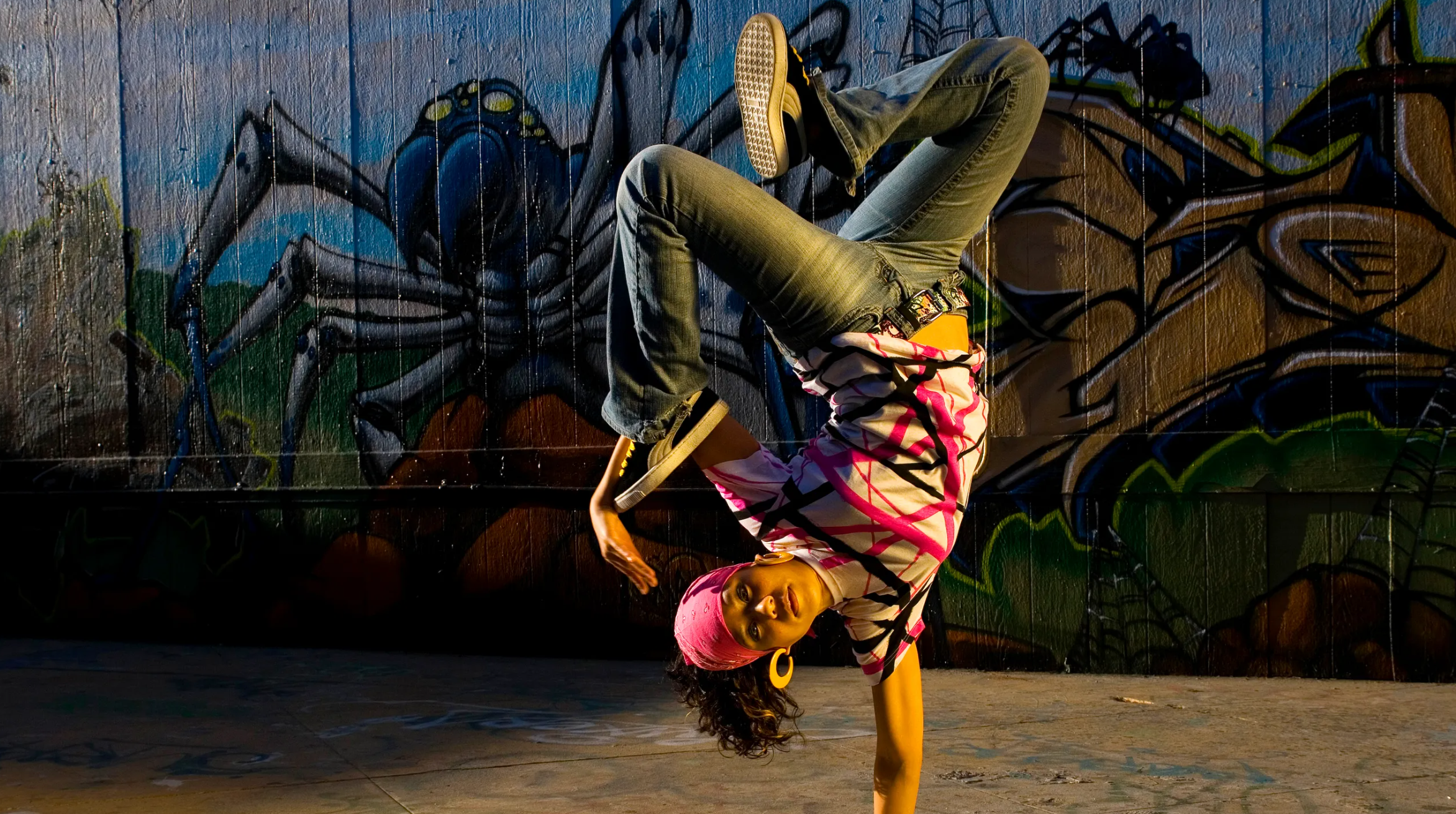
Step into a cypher and watch a b-boy or b-girl work, and you’ll see something that looks like pure spontaneity. They’re spinning, freezing, launching into footwork, responding to the music, to the energy of the crowd, to whatever the last dancer just did. It looks free. It looks improvised.

And it is. But it’s also built on a foundation of deeply practiced, rigorously developed moves.

That tension, between structure and freedom, between the learned and the spontaneous, is at the heart of breakdancing. And it’s at the heart of facilitation too.

Read more: Hip Hop and Facilitation: B-Boying & B-Girling and The Art of Improvisation Within Structure

The Vocabulary of Moves

Every b-boy and b-girl develops a vocabulary of moves. Foundational techniques that they’ve drilled until they’re muscle memory. Freezes, top rocks, power moves; each one is a tool, available to be deployed in the right moment. The mastery of those fundamentals is exactly what makes improvisation possible. You can’t freestyle with what you don’t know.

Facilitators have a vocabulary of moves too. Think about the sticky note activity – participants write their individual thoughts in silence, place them on the wall, read what others have shared, and together find the themes that emerge. Or the think-pair-share: a prompt goes out to the group, people think on their own, discuss with a partner, then share with the room. Or the human spectrum, where participants physically move to different parts of the room to represent where they stand on a question or statement.

Each of these is a move. Technically learned, practiced over time, available to deploy. And just like in breakdancing, knowing your moves deeply is what gives you the freedom to improvise with them.

Reading and Responding

In a cypher, you’re not performing in isolation. You’re in conversation. One dancer moves, others watch, and the next person responds, building on what just happened, taking it somewhere new. It’s call and response, expressed through the body.

Facilitation works the same way. You’re constantly reading the room, sensing what’s landing, noticing where energy is rising or dropping. And then you’re responding, not just executing a pre-planned sequence, but actually adapting based on what the group is giving you. If something is resonating deeply, you lean in. If something is losing people, you adjust.

This is especially alive when you’re co-facilitating. I’ve been in sessions where my co-facilitator did something that landed so powerfully with participants that it ran longer than planned, and when it was my time to jump in I had thirty minutes instead of forty-five for what came next. The cypher moved differently than I expected. So I adapted: honored what just happened, adjusted my moves, and worked within the new timing. The participants never knew what I’d planned. They only experienced what actually unfolded.

Risk and Vulnerability

Here’s something that doesn’t get talked about enough in facilitation: the risk. B-boys and b-girls put their bodies on the line. They might fall. They might attempt a move that doesn’t land…in front of everyone. That’s part of the culture. You take the risk, you might fail, and you keep going.

Facilitators take risks too. We ask participants to do things they’ve never done in front of a group – to be vulnerable, to share something real, to step outside their comfort zone and into their growth zone. And we can’t ask that of participants if we’re not willing to model it ourselves.

Sometimes that means going first. If I’m asking a group to answer a vulnerable question in an icebreaker, I might answer it first, openly and honestly, so people can see what that looks and sounds like and feel safer doing it themselves. If I’m asking people to get up and move or be a little silly, I might do it first, with confidence, so the permission is clear.

A facilitator who only asks others to take risks while staying safely behind their own comfort zone isn’t really facilitating. They’re managing. There’s a difference.

The Plan You’re Willing to Let Go Of

One of my favorite things about the breakdancing cypher is this: you don’t know what the other person planned. You only know what they did. And what they did might have been completely different from what they intended.

That’s one of the great freedoms of facilitation. You’re often the only one who knows what you planned to do. Participants know the objectives, they know the general shape of the experience, but the specific sequence of moves? That’s yours. Which means you have enormous freedom to adapt, to drop things, to change course entirely and participants will never know. They only experience what actually happens.

That’s not permission to be underprepared. It’s permission to hold your plan lightly. To plan thoroughly and then be willing to let it go the moment something better emerges. The best facilitators I know carry their session plan in their back pocket, not in their hands.

Introduction: Hip Hop and Facilitation

Element 1: MCing

Element 2: B-boying and B-girling (breakdancing)

Element 3: Graffitti

Element 4: DJing (turntabling)

Hip Hop and Facilitation: The MC – Holding the Space

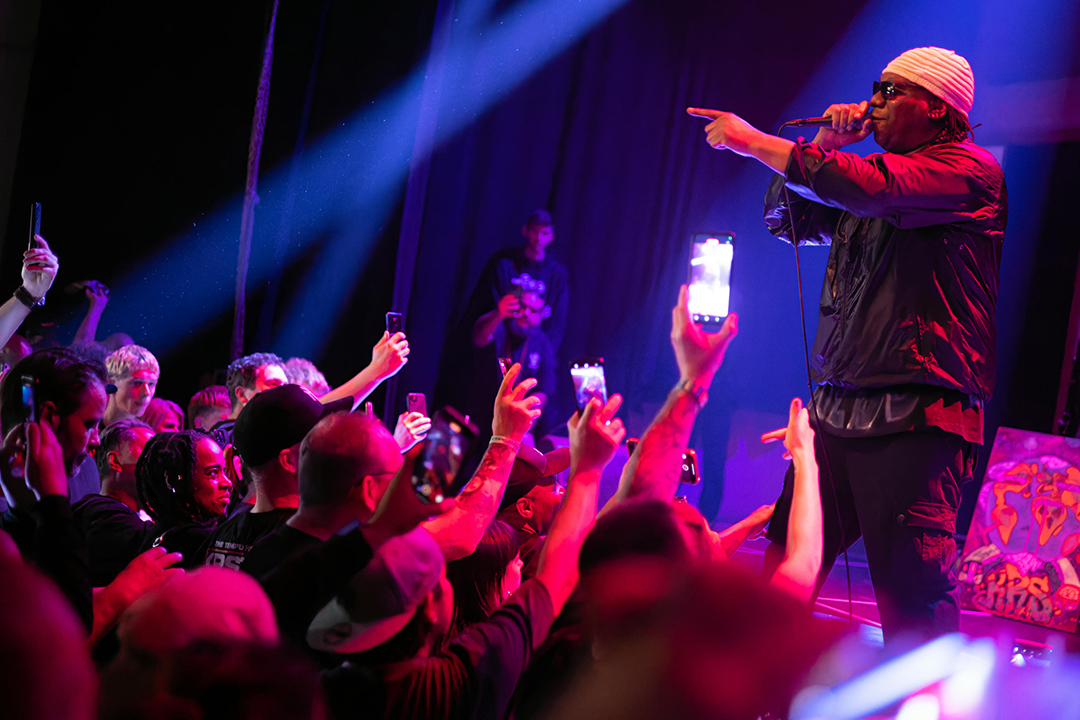
When an MC steps up to the mic, their job is clear: get everyone in that room engaged, energized, and connected to what’s happening in this moment. They’re not just performing. They’re creating a container. They’re weaving a narrative. They’re reading the crowd and responding to what they find. And they’re doing all of this while making it look effortless.

KRS One

Sound familiar? It should. Because that’s exactly what a facilitator does.

When participants walk into a workshop or training, they’re looking for someone who’s going to provide structure and guidance, but not in a way that feels rigid or top-down. They want to feel energized. They want to feel like they know what they’re supposed to be doing. They want to feel like they’re part of something collective, not just sitting in a room waiting to be talked at.

That’s the MC’s job. And it’s the facilitator’s job too.

Read more: Hip Hop and Facilitation: The MC – Holding the Space

Weaving the Narrative

One of the things I love most about the MC as a pillar of hip hop is the role of storytelling. A great MC isn’t just stringing words together, they’re building a narrative arc, taking the audience somewhere, making sure that by the time they’re done, people feel like they experienced something whole and complete.

Facilitation works the same way. Whether participants know it or not, a facilitator is weaving a narrative across the entire learning experience. Every activity, every discussion, every moment of reflection is a thread in a larger story. And at the end, whether that’s a one-day workshop or a two-week leadership program, participants should be able to look back and say: we just went on a journey together, and here’s what we made.

One of the ways I do this in my own work is by inviting participants to literally create a collective story at the end of an experience. We reflect together on what we went through, what we built, what we learned—and we construct a shared narrative out of it. That’s the MC’s gift, brought into the learning space.

Clear Instructions That Land

An MC also knows how to give instructions – how to direct a crowd, how to get people to move or respond or participate – in a way that reaches everyone in the room. Not just the people in the front row. Everyone. And that requires attention to language, yes, but also to pacing, tone, and volume.

Facilitators do the same thing. Giving clear instructions is one of the most underrated facilitation skills. It’s not just about what you say; it’s about how you say it, how slowly you pace it, when you pause, how you calibrate your voice for a room of ten versus a room of a hundred. An instruction that lands with clarity and confidence sets the entire activity up for success. An instruction that’s rushed or muddled creates confusion and anxiety before anyone’s even begun.

Reading the Room

A great MC is also a great reader of energy. They know the crowd is going to feel different at 8pm than at midnight. They know when something is landing and when it’s falling flat. And they adjust, in real time, without the audience ever knowing they’re doing it.

This is one of the most essential facilitation skills there is. The energy in a room at the start of a training is different from the energy after lunch. It’s different on day one versus day three. A facilitator has to sense those shifts and respond—leaning into what’s working, pulling back from what isn’t, making calls in the moment about what the group needs right now.

Holding Space Without Crowding It

Here’s the thing about a great MC that I think gets overlooked: they’re not the star of the show. Their job is to hype other people up. To create the conditions for the crowd, or the performers, or the participants, to shine. A bad MC crowds the space with their own voice and presence. A great MC knows when to step forward and when to step back.

The same is true for facilitation. In an ideal session, a facilitator is so good at setting up an activity that participants know exactly what to do, how to do it, and why it matters. And they can run with it with minimal intervention. If the room is buzzing and people are learning and connecting and creating, the facilitator’s job is often just to get out of the way.

That’s not passivity. That’s mastery. The MC knows it. And so does the facilitator.

Introduction: Hip Hop and Facilitation

Element 1: MCing

Element 2: B-boying and B-girling (breakdancing)

Element 3: Graffitti

Element 4: DJing (turntabling)