
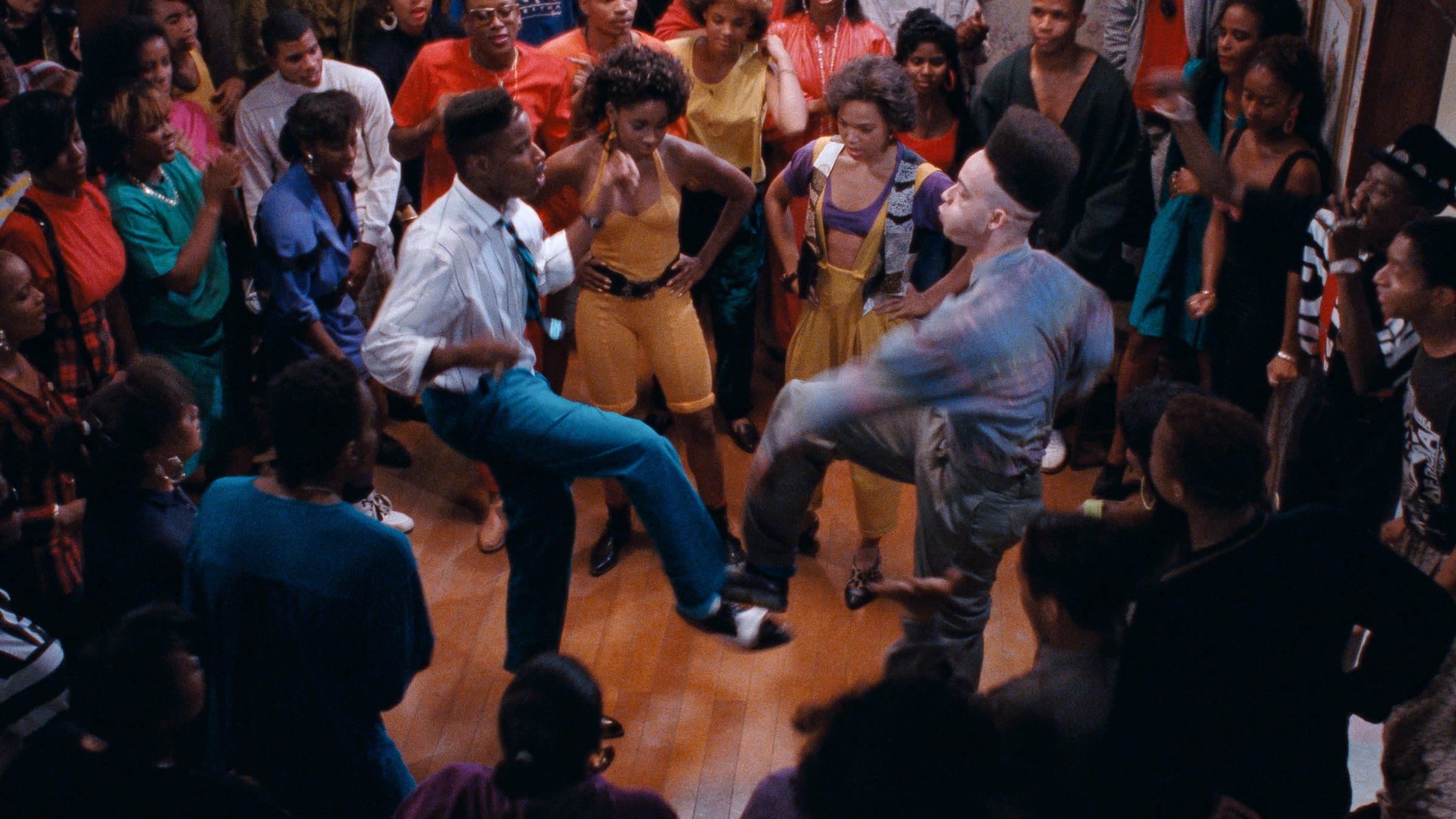
One of my all time favorite films is the original House Party that came out in 1990. Growing up, I would pop that tape into the VCR and watch it at least once a week. I rocked a flat top hair style. I even hosted my own house party freshman year in high school.
Now – these many years later, with a bald head and not VCR in sight – that movie and the whole idea of a house party has reemerged to represent something new for me: a metaphor for psychological safety.
Psychological safety has commonly been defined as a culture of rewarded vulnerability. Google’s Project Aristotle and the work of Harvard’s Amy Edmondson brought the concept of psychological safety more into the mainstream organizational lexicon. Since then, leaders and teams are increasingly aware of how important it is to their ability to innovate, leverage diverse talents and perspectives, and strengthen their overall performance.
However, knowing the concept is not enough. People often struggle to know what psychological safety actually looks like in practice. And almost nobody can explain why their team feels stuck somewhere between “people show up” and “people actually speak up.” Or, as I have heard some say, people log in to the meeting, but the cameras are off and no one seems to contribute.
Here’s the thing: psychological safety isn’t one thing. It’s four distinct stages, and your team is living somewhere on that spectrum right now whether you’re paying attention to it or not.
Researcher and author Timothy Clark identified these four stages:
- Inclusion Safety
- Learner Safety
- Contributor Safety
- Challenger Safety.
Each one builds on the last. And each one requires something different from you as a leader and team member.
I’ve spent a lot of time designing and facilitating leadership development and management programs, and I’ve found that people grasp the concept of psychological safety pretty quickly. But the four stages? Those tend to blur together.
So I want to try something a little different. I’m going to explain all four stages through the lens of a house party.
Stay with me…
A house party has everything: the moment you arrive at the door, the awkwardness of not knowing anyone, the point where you finally feel comfortable enough to jump in and eventually, whether you feel safe enough to tell the host the music is terrible.
Each of those moments maps directly to a stage of psychological safety. And once you see it, you’ll start recognizing exactly where your team is and what you need to do to move them forward.
First stop: the front door. Do your people actually feel welcome when they walk in?
Stage 1: Inclusion Safety
Imagine showing up to a house party and standing at the front door. You can hear people inside. Music. Laughter. The kind of energy that makes you want to be part of it. But nobody answers when you knock. Or someone opens the door, looks you over, and walks away without saying a word.
Do you walk in? Or do you quietly leave?
Most people leave.
This is Stage 1 of psychological safety: Inclusion Safety.
It’s the most foundational stage, and it’s the one teams most often take for granted.
Inclusion safety is the feeling that you are genuinely wanted and that you belong. That when you showed up, someone was at the door ready to say: “We’re glad you’re here. Come on in.” Not just tolerated. Not just technically allowed in the room. Actually welcomed.
When this is missing on a team, people feel it immediately, even if they can’t name it. They hold back. They perform just enough to stay visible, but never enough to be vulnerable. They’re in the room, but they’re not really in the room.
Here’s what makes inclusion safety different from some of the other stages:
It’s granted automatically. It doesn’t need to be earned.
You don’t make someone feel included by waiting to see if they deserve it. Inclusion is a basic human need. It’s the price of entry for everything else you’re trying to build with your team. I accept and include you simply because you are human.
The question isn’t whether your people technically have a seat at the table. It’s whether they actually feel like they do.
Look around your team. Is there anyone still standing at the door?
You’ve been welcomes in. But do you feel safe enough to ask questions, make mistakes, and figure out how things work around here?
Stage 2: Learner Safety
You made it inside the party. Someone welcomed you at the door. You’re in.
But now you’re standing in the entryway and you realize you don’t know anyone. You don’t know the layout of the house. There’s a group of people in the corner deep in conversation and you’re not sure how to break in. In the next room, people are playing a game, but you don’t know the rules. Someone’s leading a dance and you don’t know the moves.
You have questions. A lot of them. The question is: do you feel safe enough to ask them?
This is Stage 2 of psychological safety: Learner Safety.
Learner safety is the feeling that you can ask questions, try things and make mistakes without being made to feel stupid, slow, or like a burden for not already knowing.
Think about what a good host does in this moment. They don’t leave you standing in the entryway alone. They give you a tour. They introduce you to people. They show you how the game is played, walk you through the dance, and make it clear that no question is a bad question. The welcome your questions, knowing that your curiosity and eagerness to learn will enhance your participation and engagement.
They create the conditions for you to get oriented because they know that a guest who feels lost and too afraid to ask for help will quietly check out and go home early.
Now think about what a bad host looks like. The eye roll when you ask where the bathroom is. The impatience when you need the rules explained again. The laughter when you try the dance and get the steps wrong. That’s what kills learner safety on a team.
It’s not always dramatic. Sometimes it’s just a subtle signal that questions are an inconvenience. That not knowing something is a character flaw. That mistakes are something to be ashamed of rather than learned from.
And when people get that signal, they stop asking. They stop trying. They start “performing confidence” they don’t have, which is exhausting, inefficient, and one of the most expensive things that can happen on a team.
Like inclusion safety, learner safety needs to be automatically granted. It does not need to be earned. Every person on your team deserves the space to learn, ask questions, and make mistakes simply because they’re human and growth takes time.
As a member of a team, the question isn’t whether your colleagues can ask questions. It’s whether they will.
Is anyone on your team pretending to know something they don’t because it doesn’t feel safe not to?
This is where things shift. You’ve learned the lay of the land. Now the question is — are you trusted to actually lead something?
Stage 3: Contributor Safety
You know the house well now. You know where everything is. You know the people. You’ve learned the games, picked up the dances, found your footing. You’re not a guest anymore, you’re part of what makes this party work.
And you’ve got an idea. A new game you think people would love. A way to welcome the next person through the door that would make them feel even more at home. Something you could take ownership of that would make this whole experience better.
So you bring it to the host. Do they hand you the keys or do they keep their hands on everything?
This is Stage 3 of psychological safety: Contributor Safety.
Contributor safety is the feeling that you are trusted to take the lead. To bring your ideas forward, take ownership of something meaningful, and make decisions without someone looking over your shoulder every step of the way.
It’s the difference between being a guest at someone else’s party and feeling like you’re actually helping to create the experience.
And here’s where something important shifts.
Inclusion safety and learner safety should be automatically granted. Every person on your team deserves to feel welcomed and safe to learn simply by virtue of being human. Those aren’t things people have to prove themselves worthy of.
Contributor safety is different. It’s earned. It comes after someone has demonstrated that they understand the work, know the team, and have the judgment to take ownership of something and move it forward. It’s not handed out on day one, and it shouldn’t be. But when someone has put in that work and shown what they’re capable of, it needs to be recognized. And acted on.
Because here’s what happens when it isn’t. People who have earned the right to contribute, who have real ideas, real capability, and real investment in the work, start to disengage when they’re not given the space to actually use any of it. They don’t leave immediately. They fade. They stop bringing their best ideas forward because they’ve learned those ideas won’t go anywhere. They do what’s asked of them and nothing more.
As a leader, your job is to track who has reached this stage and then get out of the way. Not abdicate. Not disappear. But trust.
The question isn’t whether your people are capable of leading something. It’s whether they are given the room to prove it.
Who on your team has earned contributor safety, and are you actually giving it to them?
Uh, oh. Something is going awry. Do you feel safe enough to tell the host something isn’t working?
Stage 4: Challenger Safety
You’ve been at this party for a while now.
You know the host. You know the guests. You’ve welcomed people at the door, led a game in the other room, and contributed to making this one of the better parties you’ve been to in a long time.
And then you notice something. The energy in one of the rooms has shifted. People look restless. The game that was fun two hours ago has worn out its welcome. Or maybe you’ve noticed something more serious, a situation that’s starting to feel uncomfortable, maybe even unsafe.
You know what needs to be said. But do you feel safe enough to say it?
This is Stage 4 of psychological safety: Challenger Safety.
Challenger safety is the feeling that you can speak up when something isn’t working. That you can push back, offer a dissenting point of view, or flag a concern without fear that doing so will cost you your place in the room.
It is, by far, the hardest stage to build. Because the risk feels real. If you challenge the host and they don’t take it well, what happens? Maybe you’re asked to leave. Maybe you’re not invited back. On a team, the stakes feel the same. Raise the wrong concern at the wrong moment and suddenly you’re ostracized, passed over, or quietly pushed to the margins.
So people stay quiet. They watch things go in a direction they have concerns about and say nothing. They protect themselves at the expense of the team. And the team pays for it.
Here’s the hard truth for not just leaders, but the entire team: team members are taking their cues from everyone. Every time someone raises a concern and you get defensive, dismiss it, or subtly punish the person for bringing it, even unintentionally, you are teaching the team that challenger safety doesn’t exist here.
So what does it actually take to build it?
First: know how you respond in the moment.
When someone pushes back on a decision you’ve made, challenges the direction of a project, or tells you something you don’t want to hear, what happens in your body? What happens in your face? Do you get defensive? Do you shut down? Do you redirect the conversation?
Your emotional response in that moment is the single biggest signal your team receives about whether it’s safe to challenge you. You don’t have to agree with every dissenting view. But you have to be able to receive it without making the person regret they spoke up.
That takes self-awareness. It takes practice. And it starts with being honest about your own patterns.
Second: don’t wait for people to come to you. Go to them.
The teams that build the strongest challenger safety don’t just tolerate pushback, they actively invite it. They make it a regular part of how they operate. In one-on-ones. In team meetings. In the way they close out a project.
What’s something we should be doing differently? What’s a decision I’ve made recently that you’d push back on? What are we not talking about that we should be? What are the pros and cons of this approach? What perspectives are we not yet considering?
In the house party analogy, the best hosts aren’t just gracious when a guest raises a concern. They pull trusted guests aside and ask: how’s the party going, really? What would you change?
That’s not weakness. That’s the culture of challenge and growth that makes teams, and house parties, worth showing up to.
Challenger safety doesn’t mean everyone agrees. It means everyone can afford to disagree.
As a leader, the question isn’t whether your team has concerns about the work. They do. Everyone does. The question is whether they trust you enough to say so.
Conclusion
We’ve been to a house party.
We stood at the front door and asked whether people feel genuinely welcomed in, or like they’re showing up somewhere they’re not sure they belong. That’s Inclusion Safety.
We walked through the entryway and asked whether people feel safe enough to ask questions, make mistakes, and find their footing without fear of judgment. That’s Learner Safety.
We moved deeper into the house and asked whether people who have put in the work are actually being trusted to lead something, own something, and contribute something meaningful. That’s Contributor Safety.
And we asked the hardest question of all, whether people have enough trust to tell the host when something isn’t working. That’s Challenger Safety.
Four stages. One progression. And every team you’ve ever been a part of is somewhere on that spectrum right now.
Here’s what I want to leave you with. Psychological safety isn’t a culture initiative. It isn’t a workshop you run once a year or a value you put on a slide deck. It’s something your team feels, or doesn’t feel, in the small moments every single day. In how you respond when someone asks a question. In whether you hand over ownership when someone has earned it. In what happens to your face when someone pushes back.
It’s built slowly and it can be lost quickly. And it starts with knowing where your team actually is. Not where you hope they are. Not where you assume they are. Where they actually are.
So here’s the question I’ll leave you with:
Which stage do you think is hardest to build on your team — and why?
Is it getting people to truly feel included? Creating the space to learn and make mistakes? Trusting people enough to let them lead? Or building the kind of culture where people feel safe to challenge the status quo?
There’s no wrong answer. But there’s a lot to learn in the asking.

