Category Archives: Education/Training

Civil Resistance and the Dynamics of Nonviolent Conflict

This week I finished facilitating ICNC’s  eight-week course, Civil Resistance and the Dynamics of Nonviolent, which is offered in partnership with the United States Institute of Peace.  This is the second iteration of this course – by far the most popular fall 2010 course offered through USIP’s academy – and we’ve made some significant improvements from last time.

Continue reading

Gandhi-King Conference on Peacemaking

This past weekend, I attended the Gandhi-King Conference on Peacemaking in Memphis, TN.  This was the second time I have attended and presented at the conference and definitely plan on attending again next year.  The conference brings together a great group of educators, activists, and organizers interested in various topics related to peace, conflict resolution, community organizing, and social justice.  Download the full conference program here.  This year I had a lot more time to meet and learn from all the other amazing participants since I was there for the whole event, as opposed to three years ago, when I missed half the conference because I got lost and ended up roaming the streets of Memphis for five hours.

Continue reading

The Digital Duel: Resistance and Repression in an Online World (Webinar)

This past Thursday I presented my very first webinar, The Digital Duel: Resistance and Repression in an Online World, which looked at the emerging role of digital tools, new media, and the Internet in waging nonviolent struggle across the world.  It also looked at how repressive regimes are also using these same tools to censor and clamp down on dissent and civic mobilization.

Continue reading

Learn-Serve International Workshop

Learn-Serve students at the end of their weekend retreat

This weekend, three of my training colleagues and I went out to the For the Love of Children’s Outdoor Education Center in Harper’s Ferry, VA to facilitate a workshop on cross-cultural learning with students in the Learn-Serve International program.  Learn-Serve brings together high school students from all over the Washington, DC area to work in teams throughout the year, developing and implementing a social entrepreneurship project that addresses a need in their community.

Continue reading

International Day of Peace at Baltimore’s Friendship Academy

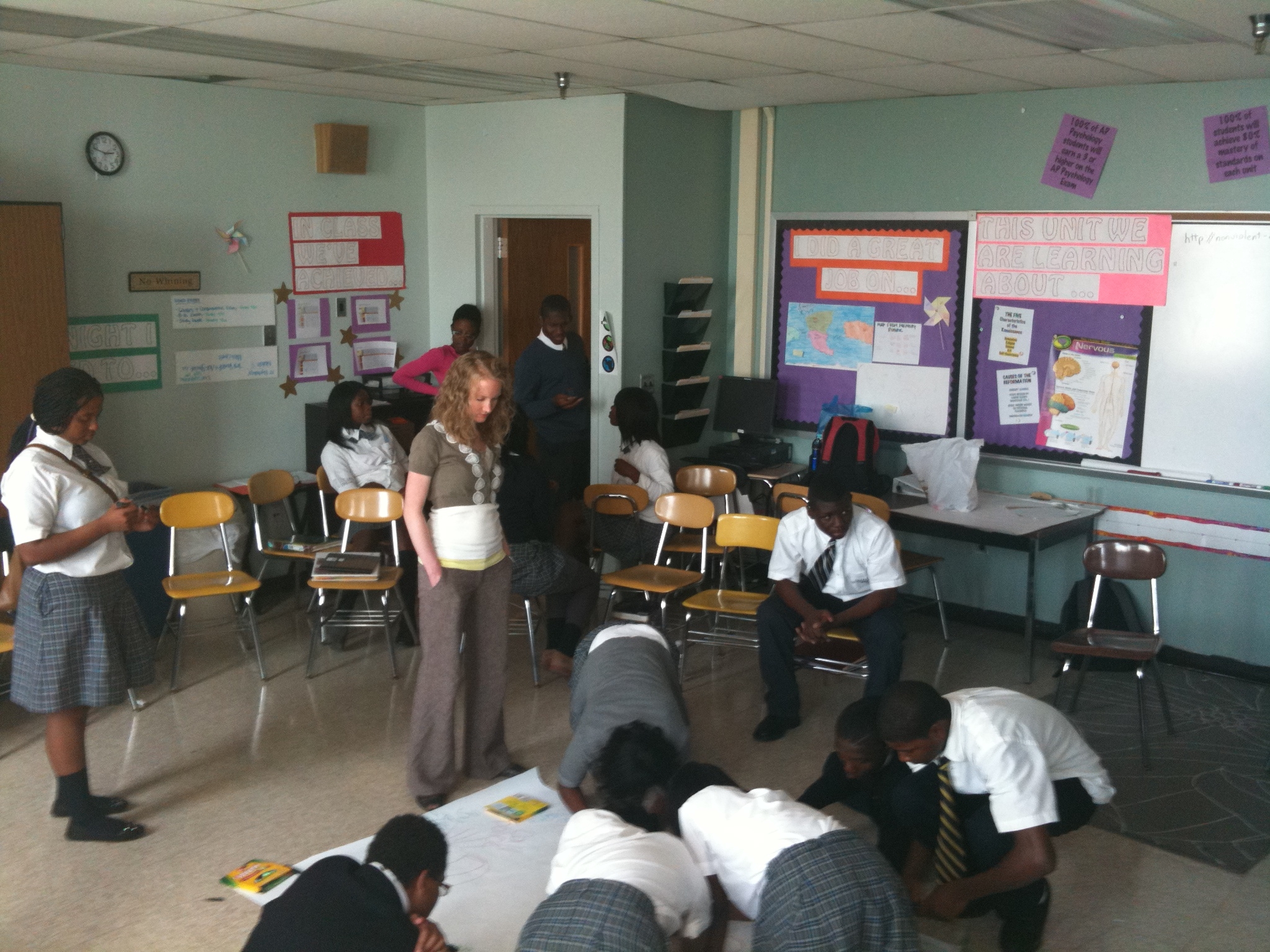
Friendship Academy students working on their peace mural

Today I spent the day at the Friendship Academy Charter School in Baltimore, MD, where the faculty and staff had organized a series of workshops in recognition of the International Day of Peace.

My colleague, Jake Fitzpatrick, and I facilitated a series of workshops for about 150 high school sophomores, juniors, and seniors (3 sessions of 40-50 students each).  Our workshop had students first think about some of their own experiences where they felt they contributed to creating a more peaceful environment – whether it be cooking dinner for a loved one, breaking up a fight in school, lobbying for a social justice cause, or stepping away from a potentially combative situation and taking a deep breath to prevent one’s anger from lashing out.  We then talked a bit about the history and mission of the International Center on Nonviolent Conflict and how its an organization that actually educates and teaches people how to fight in order to stand up for one’s rights, resist oppression, and bring forth a more just and free society.

Continue reading

Fall 2010 Semester Begins at American University

This fall semester, my dad and I will once again be teaching the course, Education for International Development. Each semester teaching this course (and this is our third), we are trying to find new ways to better engage the students with the subject, explore new teaching methods, and experiment with new online learning platforms.

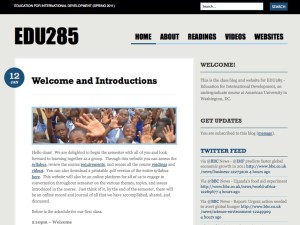
In past semesters we have used the social networking service, Ning, which served our purposes pretty well, especially since it creates a Facebook type experience with which most students are familiar. However, Ning got rid of its free service, so we decided to use a different online platform to host our course discussions and materials and we chose wordpress.  Check out the class website to see how we set it up.

Continue reading

Draper Hills Summer Fellowship on Democracy and Development

This week I had the pleasure of delivering a presentation at the Draper Hills Summer Fellowship on Democracy and Development program at Stanford University.  Every year, the International Center on Nonviolent Conflict gives a series of presentations looking at the role of nonviolent conflict and civil resistance in mobilizing civil society to establish democratic self-rule, strengthen democratic institutions, and hold governments accountable.  I was joined by two of my colleagues at ICNC – Dr. Peter Ackerman (Founder) and Hardy Merriman (Senior Advisor).

My presentation looked at a new, teaching and strategic planning tool ICNC has designed in partnership with York/Zimmerman, INCPeople Power: The Game of Civil Resistance is a serious, turn-based, strategy game that engages the user in the mental contest of organizing and waging a nonviolent movement.

Continue reading

Peace Education Course with DCPS Teachers

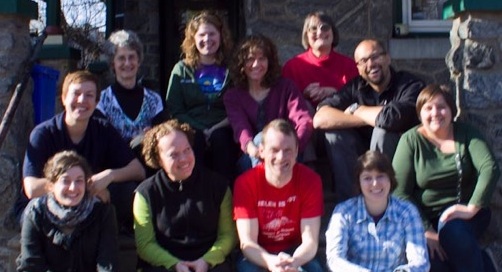
Great group of DCPS teachers, counselors and administrators participating in my peace education class

I just finished teaching a week-long (m-f, 9am-5pm) intensive peace education course at American University with 24 DC Public School teachers, counselors, and administrators.

The course is offered as part of the Alliance for Quality Urban Education, a partnership among key stakeholders in teacher education in the District of Columbia. The goal of AQUE is to improve student achievement through a comprehensive teacher preparation model, designed to support the ongoing development of a highly qualified teaching force.

It was such an honor to work with these dedicated and talented educators and to spend a week with them exploring themes such as community building, multiple intelligences, conflict resolution, nonviolent civic action, emotional intelligence, and a number of experiential and participatory methods of engaging their students in all these themes.

Download course syllabus.
Download sessions learning plans.

Professional Educators Workshop at UW-Madison

From June 28 – 29, I have had the distinct pleasure of facilitating a series of workshops at a conference for professional educators.  The conference, Nonviolent Civic Action around the World, was organized and hosted by the Global Studies Center at the University of Wisconsin, Madison.  I was invited to present by the United States Institute of Peace, an organization with whom I have worked in collaboration with my colleagues at the International Center on Nonviolent Conflict.  I also had the pleasure of designing and co-facilitating some of these workshops with another teacher trainer from George Washington University.

As the center’s website states, the conference is “a two-day development workshop for professional educators interested in understanding and teaching about international peace-building movements… The theme — Nonviolent Civic Action around the World — will appeal to educators broadly defined to include K-12 teachers, university educators, professional communicators, and college and university students training in these fields.

Continue reading

Fletcher Summer Institute for the Advanced Study of Nonviolent Conflict

Each year, the International Center on Nonviolent Conflict holds a week long course on nonviolent conflict and civil resistance at the Fletcher School for Law and Diplomacy at Tufts University.  Participants come from all over the world and from a variety of backgrounds.  This year we had participants from 5 continents, 25 countries, speaking 18 different languages, and professionals and/or organizers involved in various nonviolent struggles around the globe in places like West Papua, Palestine, Egypt, Nepal, India, Burma, Russia, Zimbabwe, Kenya, Mexico, and several other places.

I attended the Fletcher Summer Institute (FSI) last year, but only for a couple days, so it was a real treat to be able to experience the program in its entirety.  Also, being a staff member this year, as opposed to an observer last year, I had a lot more responsibility in helping develop, organize, plan, and facilitate the institute (during the week of the Institute, I put in 96 hours of work!).

Continue reading