Category Archives: Education/Training

SCA Conflict Resolution Workshop

This Tuesday I teamed up with a friend and fellow peace educator, Tarek Maassrani, to co-facilitate a conflict resolution workshop for 45 crew leaders in the Washington DC Department of the Environment’s Green Zone Environmental Program (GZEP).  We were sub-contracted by the Student Conservation Association – an educational and environmental non-profit that works with youth across the country on conservation and trail building.  They also work with GZEP in coordinating a series of workshops on leadership, conflict resolution, trailbuilding, and teamwork to orient GZEP crew leaders and prepare them for the program.   Learn more about what we covered in the workshop.

Continue reading

4th International Conflict Resolution Education Conference

I just attended the 4th International Conflict Resolution Education Conference, which was held from June 8 – 11 in Cleveland, OH (download full conference program).  Educators from the United States and all over the world – Korea, Ghana, Kenya, Trinidad & Tobago – gathered at Cuyahoga Community College to participate and present a number of key workshops.  I was joined by my colleagues, Hardy Merriman and Maciej Bartkowski from ICNC.  I facilitated a session titled, “Liberation Tech? The Influence of the Internet and Digital Activism in Nonviolent Struggle.”  Continue reading to learn more…

Continue reading

School of Authentic Journalism

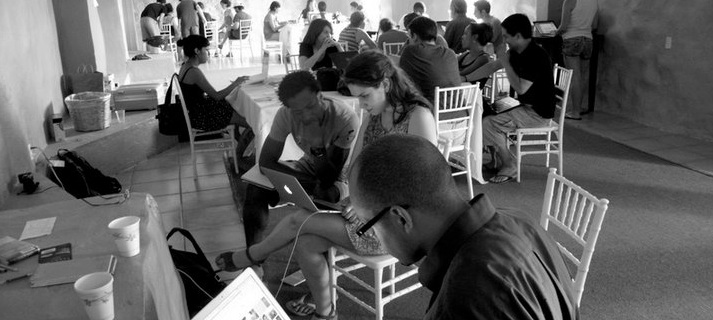
From May 11-21 I was one of 79 journalists, organizers, and educators who gathered in the State of Morelos in Mexico to attend the 2011 School of Authentic Journalism.  The school takes a unique approach – both with content and structure – in exploring the field of journalism, particularly in its role covering social movements across the globe.  The school was founded and is organized by Al Giordano, the editor of Narco News and a man who started organizing at a young age as part of the anti-nuclear power movement in the United States.  Check out this interview I conducted with him in 2009.  The school consisted of a mixture of plenary sessions where we got to hear seasoned journalists from a variety of mediums (video, photo, and print), contemporary organizers and veterans from nonviolent movements, and scholars of civil resistance.  Below I outline an extensive overview, going through each day, of what I experienced at the school along with links to others’ reflections and articles about the participants and the school.

Continue reading

AU Spring Semester Ends with Pecha-Kucha

Even with a whopping 58 students in the class, the spring semester has flown by.  Since we like to elicit a lot of participation from the student, facilitate a lot of group activities, get the students moving around, and playing around with different learn space set ups, an increased class size, in a room with auditorium style fixed seating, made for some teaching and facilitation challenges.  But my dad and I made the necessary adjustments and, as far as I can say, had a good time working, yet again, with another group of AU students.

As we’ve done in the past, we ended the semester with students working in teams to design a education/training program that seeks to address one of many development challenges facing the finctional country of Afrinia.  The teams then present their program to the rest of the class, specifically addressing questions related to the major themes and concepts covered during the semester.  We did a little something different this year, however, with the presentations – we asked each team to put together a pecha-kucha presentation.

Continue reading

Presentation for the One World Youth Project

This past weekend I gave a presentation on skills and approaches to teaching and facilitation for the One World Youth Project (OWYP).  OWYP is a great non-profit educational organization that links schools globally in service-learning to prepare the next generation for the globalized 21st century. In service of this mission they train college and university students  to go into local high school and middle schools to teach and implement elements of the OWYP curriculum which focuses on exploring the Millennium Development Goals and other global issues.  My presentation was filmed and will be put online to be used as a resources for college students who are “educators in training” interested in learning more about specific education approaches and teaching techniques that can help them be creative, culturally aware, and effective facilitators for OWYP.  Continue reading to check out my remarks.

Continue reading

Workshop on Citizen Journalism and Civil Resistance

For the last six days I was in Madrid, Spain to help facilitate a workshop that married the two fields of citizen journalism and civil resistance.  The goal of the workshop was to prepare journalists, bloggers, and communicators from around the world to better understand the strategic dynamics of nonviolent social movements so they can more effectively report on these struggles in ways that will help them to succeed.  26 citizen journalists participated in the workshop coming from the following countries: Azerbaijan, Afghanistan, UK, Phillipines, Mexico, Spain, Israel/Palestine, Brazil, Yemen, Bahrain, Egypt, Macedonia, Ukraine, India, Sri Lanka, Lebanon, Serbia, France, and Finland.

Continue reading

Training for Change Workshop – How to Teach Theory

From Thursday, Feb 24 – Sunday, Feb 27, I attended the Training for Change workshop, How to Teach Theory.  This is the second TfC workshop in which I have participated.  The first was their Training for Social Action Trainers (TSAT), which I found to be a highly effective, engaging workshop that helped me develop new skills as a trainer and educator in ways that made it more likely that I would actually use these skills in my professional work.  One of the TSAT trainers recommended that I take the How to Teach Theory workshop, considering both my work for ICNC and at AU – two teaching and training settings that require exploring theories and abstract ideas.  The goals of the workshops were: (1) increase your skills at presenting theory and concepts without lecturing, (2) gain confidence and experience in moving a group from stage 2 (reflection) to stage 3 (generalization) to stage 4 (application) in the direct education model/experiential learning cycle, (3) Identify key teaching concepts and theories in your teaching area, and (4) have fun!  Below I have outlined what was covered in the workshop and some thoughts on why I think they are important.

Continue reading

2011 Democracy Matters Summit

This past weekend I returned to Albany, NY to participate in my fifth consecutive Democracy Matters summit and it never ceases to be an educational and inspiring experience.  A special part of this year’s summit was that DM’s president and founder, Adonal Foyle, was able to attend and give the keynote address.

Continue reading

Spring 2011 Semester Begins at AU

The spring 2011 semester at American University has begin and my dad and I continue to teach EDU285 – Education for International Development.  This semester marks the fourth time we’ve taught this course and we are continuing to find new ways to make the class better – introducing appropriate amounts of content, incorporating a diverse set of activities and exercises, and utilizing new online tools to enhance student learning.  This semester there are three main changes from previous semesters: (1) a Twitter feed (@AUedu285) to follow stories related to education and international development, (2) a website redesign, and (3) more guest speakers.

Continue reading

Key Insights from George Lakey’s book, “Facilitating Group Learning”

I recently finished reading George Lakey’s new book, Facilitating Group Learning: Strategies for Success with Diverse Adult Learners.  I thoroughly enjoyed this book because it provides a clear description and examples of what experiential education, or what Lakey calls direct education, is and entails.  Having been an experiential educator for several years now, Lakey and his colleagues at Training for Change, have become a real source of learning for me and my work.  Below are several key insights from the book:

Continue reading