Tag Archives: nonviolence

2011 Fletcher Summer Institute

From June 19-24, I attended, helped organize, and presented at the 2011 Fletcher Summer Institute for the Advanced Study of Nonviolence Conflict. This yearly institute is the only professional level course of its kind offered in the world that explores the strategic use of nonviolent civic action – strikes, boycotts, mass demonstrations, civil disobedience, etc. – as a method of fighting for and defending human rights, social justice, and democratic self-rule.

This year the institute brought together 45 participants from 26 countries and delved into topics such as forming a movement, the paradox of repression, citizen journalism and movement media, negotiations and transitions, and the role of third party actors in supporting civil resistance movements. My colleague, Nicola Barrach, and I co-presented a session on digital and social media in civil resistance, which looked at the uses and limitations of digital technology, social media, and the internet in waging nonviolent struggle.

In addition to presenting, I also helped coordinate various media elements of the institute by integrating the use of our FSI alumni network Facebook group page as a platform for continued discussion and resource sharing; organizing live, communal note-taking on Twitter with the #fsi11 hashtag; curating and sharing key tweets and resources mentioned during the different sessions using Bundlr; recording audio interviews with participants and presenters and sharing those recording on Twitter using Audioboo; and conducting longer video interviews with select participants and presenters for the ICNC website and our On the Ground Interview Series.  Needless to say, I did not get much sleep, but I did have a great time, learning a lot from some amazing organizers, activists, and educators!  Continue reading to learn more about the institute, the various sessions, and some of the key take-aways from each.
Continue reading

School of Authentic Journalism

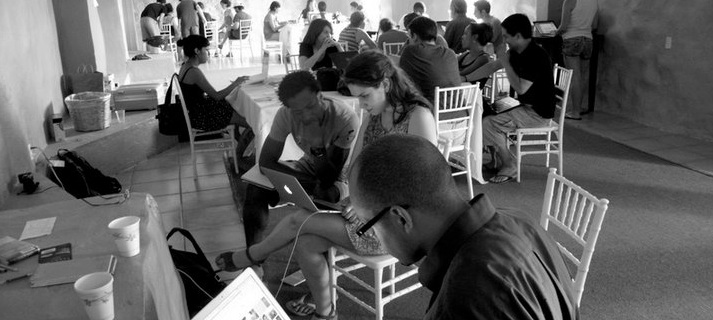
From May 11-21 I was one of 79 journalists, organizers, and educators who gathered in the State of Morelos in Mexico to attend the 2011 School of Authentic Journalism.  The school takes a unique approach – both with content and structure – in exploring the field of journalism, particularly in its role covering social movements across the globe.  The school was founded and is organized by Al Giordano, the editor of Narco News and a man who started organizing at a young age as part of the anti-nuclear power movement in the United States.  Check out this interview I conducted with him in 2009.  The school consisted of a mixture of plenary sessions where we got to hear seasoned journalists from a variety of mediums (video, photo, and print), contemporary organizers and veterans from nonviolent movements, and scholars of civil resistance.  Below I outline an extensive overview, going through each day, of what I experienced at the school along with links to others’ reflections and articles about the participants and the school.

Continue reading

Capital Area Association for Peace Studies (CAAPS) Keynote Address


This weekend I had the privilege of giving the keynote address at the 24th annual Capital Area Association for Peace Studies student conference.  It was such a pleasure speaking with all the students and then attending several of their project and paper presentations.  I also enjoyed putting together my remarks because it gave me an opportunity to (1) explain how the work of peace scholars is transforming the world and why that is important and (2) how my work in the field of nonviolent conflict and civil resistance in increasingly influencing the interest in peace studies.  Click above to listen or click read more below to read my remarks.

Continue reading

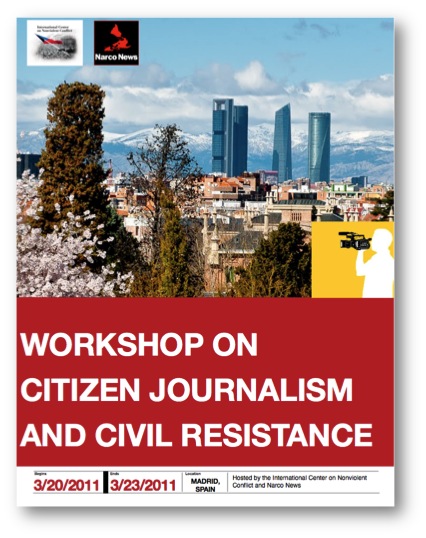
Workshop on Citizen Journalism and Civil Resistance

For the last six days I was in Madrid, Spain to help facilitate a workshop that married the two fields of citizen journalism and civil resistance.  The goal of the workshop was to prepare journalists, bloggers, and communicators from around the world to better understand the strategic dynamics of nonviolent social movements so they can more effectively report on these struggles in ways that will help them to succeed.  26 citizen journalists participated in the workshop coming from the following countries: Azerbaijan, Afghanistan, UK, Phillipines, Mexico, Spain, Israel/Palestine, Brazil, Yemen, Bahrain, Egypt, Macedonia, Ukraine, India, Sri Lanka, Lebanon, Serbia, France, and Finland.

Continue reading

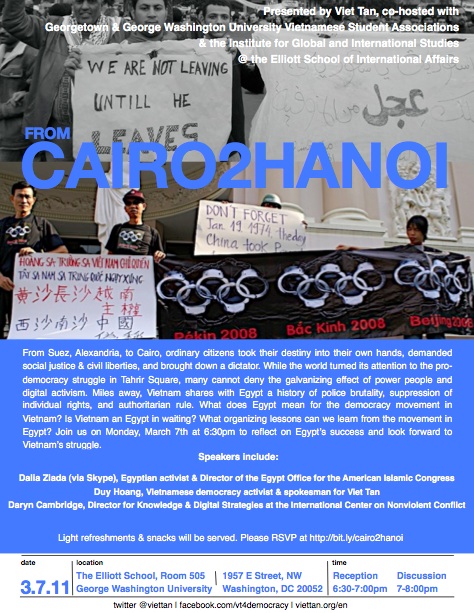
From Cairo2Hanoi Panel Discussion

Yesterday I participated in a panel discussion event organized by Viet Tan – an organization that engages in actions that empower the Vietnamese people. Specifically, they seek to roll back existing restrictions against two key human rights: freedom of expression and freedom of association and assembly. These enabling freedoms are the pillars for civil society (Viet Tan).

The event looked at the role of social media in the nonviolent uprisings in Tunisia and Egypt and whether or not there are any relevant connections that can be made between those who engaged in civil resistance and digital activism in Tunisia and Egypt with those who continue to struggle in Vietnam.  I had the pleasure of speaking alongside to amazing activists and organizers.  Continue reading to learn more…

Continue reading

The Social Revolution

This week I gave a couple a couple talks at Rutgers University.  I was invited by Dr. Kurt Shock, who is an associate professor of sociology and global affairs at Rutgers and is one of ICNC’s academic advisors.  I first spoke in his colloquium course, where I gave a presentation titled, The Social Revolution: Digital Media, Cyber-Pragmatism, and Nonviolent Movements, which I will outline in greater detail later in this post.  The second presentation I gave was to his undergraduate class on social movements, where we looked at the role of the internet and social media in social movements more broadly.  In both presentations I used the uprising in Egypt as a case study in exploring these themes.

Continue reading

Key Insights from George Lakey’s book, “Facilitating Group Learning”

I recently finished reading George Lakey’s new book, Facilitating Group Learning: Strategies for Success with Diverse Adult Learners.  I thoroughly enjoyed this book because it provides a clear description and examples of what experiential education, or what Lakey calls direct education, is and entails.  Having been an experiential educator for several years now, Lakey and his colleagues at Training for Change, have become a real source of learning for me and my work.  Below are several key insights from the book:

Continue reading

Civil Resistance and the Dynamics of Nonviolent Conflict

This week I finished facilitating ICNC’s  eight-week course, Civil Resistance and the Dynamics of Nonviolent, which is offered in partnership with the United States Institute of Peace.  This is the second iteration of this course – by far the most popular fall 2010 course offered through USIP’s academy – and we’ve made some significant improvements from last time.

Continue reading

Interview with West Papuan Activist, Herman Wainggai

One of the best parts of my job is having the opportunity to meet amazing people who are on the front lines of nonviolent movements across the world.  Earlier this year, I started an online initiative interviewing nonviolent action takers in order to share the stories, experiences, and perspectives of these individuals and their movements so that the rest of the world may be made aware of their struggle.  In this interview I speak with Herman Wainggai, a leader in West Papua’s self-determination struggle.

Continue reading

The Digital Duel: Resistance and Repression in an Online World (Webinar)

This past Thursday I presented my very first webinar, The Digital Duel: Resistance and Repression in an Online World, which looked at the emerging role of digital tools, new media, and the Internet in waging nonviolent struggle across the world.  It also looked at how repressive regimes are also using these same tools to censor and clamp down on dissent and civic mobilization.

Continue reading