Video

Online Civil Resistance Course Launches

After about a year of development, USIP has released a self-study, online version of the course, Civil Resistance and the Dynamics of Nonviolent Conflict. I started working on this course with my colleagues at USIP and ICNC in 2012. Having recently joined USIP, full-time, I am very pleased that this was one of the first self-study onlie course USIP released. I look forward to seeing how learners engage with the course, what kind of impact it will have, and how we will continue to refine it and make it even better in the months and years to come.

Keynote Address at “Teaching about Global Conflict and Peacebuilding” Conference

photo-2This weekend I gave the keynote presentation at the Teaching about Global Conflict and Peacebuilding Seminar at Montgomery College. The conference brought together over 30 community college professors from across the country teaching in a variety of fields and all interested in incorporating peace and conflict studies into their work. I was invited to give the keynote address by the conference organizer, David Smith, an education and peacebuilding consultant who has for many years now been working with community college helping them build and develop peace and conflict studies program.

The title of my presentation was, “Teaching Our Way Out of the Cave: How Peace and Conflict Educators Are Challenging War, Violence, and Human Suffereing.” The title at first might seem a bit obscure, but for the past few years I have been using the metaphor of a cave to explain the differences between direct violence and structural violence and the difference between negative peace approaches and positive peace approaches to addressing those different kinds of violence.

Continue reading

Nonviolence Presentation at New School of VA

IMG_5903

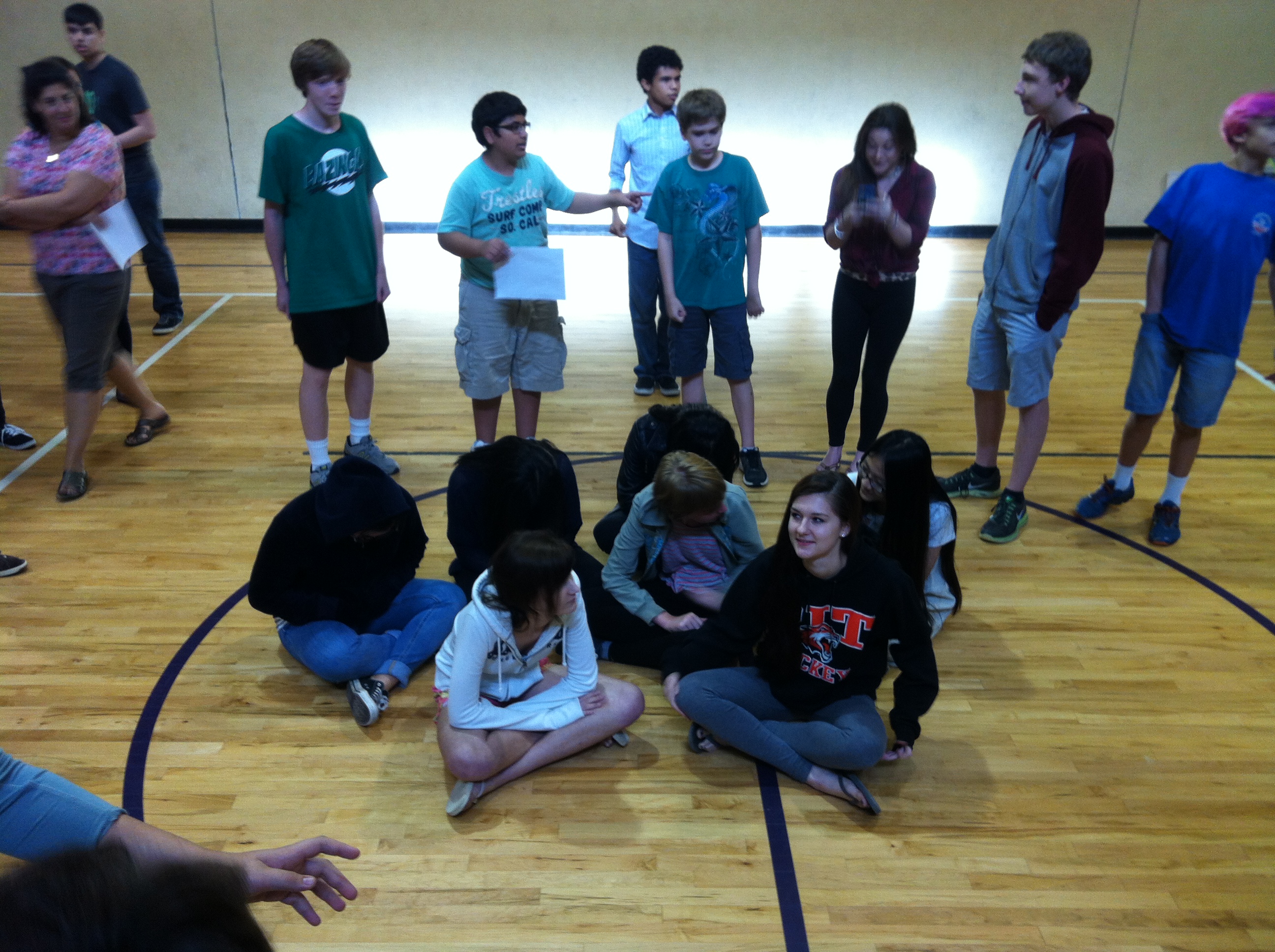
This past Thursday, my friend and colleague, Althea, and I facilitated a presentation on nonviolence for a group 100 6-12 graders at the New School of Virginia. My friends and former colleague, Travis Cooper, invited us to give this workshops as part of a learning unit he was doing with his students looking at civic activism.

This was a great opportunity for Althea and I to mix concepts from various orientations and conceptions of nonviolence – the ICNC strategic nonviolent action orientation and the Kingian nonviolence orientation.

Continue reading

Peace Education Summer Online Course

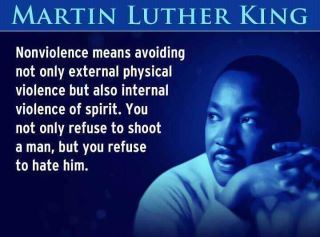
MLKQuoteDuring the second session of American University’s summer 2013 semester, July 1st – August 15th, I taught an online version of my edu-596 Peace Pedagogy course. This course had approximately 13 students, all DC area teachers. The course description reads similar to the other EDU-596 courses that were taught on-site. However, a different pedagogical approach was taken given the online format. Click here to download syllabus.

The course was a blend of synchronous (weekly partnered phone conversations and three, all-class conference calls) and asynchronous learning (weekly discussion boards and daily peace actions). I also provided weekly videos or podcasts summarizing key questions and insights each of the students made in the discussion forums. The entire course was hosted on my customized website, http://peacelearner.org.  This was an interested endeavor in that the in-person course, as one would expect, relies heavily on student participation, modeling, and face-to-face interactions and conversations . So, how was one to do this effectively online?

Continue reading

Cultivating Peace in Our Schools Gathering


IMG_5229
On July 16th  and 17th, 2013 I helped organize and facilitate a 1.5 day intensive workshop for DC area teachers to learn about peace education programs and initiatives being implemented in the DC area. In this effort, I worked closely with Laurie Segel-Moss, Assistant Director of the Center for Peacebuilding and Development (CPD) and Maura Scully, Program Coordinator for the Mohammed Said Farsi Chair of Islamic Peace.

The purpose of the gathering was to elevate the peace education work that orgs, schools, and teachers are already doing throughout the DC area; escalate the work of peace education by integrating the skills, methods, and models developed by the featured organizations into the teachers’ educational practice, their classrooms, and schools; and spread these methods, models and programs to other teachers, classrooms and schools after experimenting with what was shared through this gathering.

Continue reading

Peace Education at AU Interview Series

This above interview with Barbara Wien is one of the many interviews I conducted over the course of the Spring 2013 semester at AU speaking with professors about the work they do, the courses they teach and how they relate to various elements of peace education. I had the pleasure of working with Katie Kassof, an AU staff member and former student from my 2012 peace pedagogy course, to do the actual filming. Katie filmed the actual interviews and I devised specific sets of questions for each interviewee, scheduled times with each of them in the studio, conducted the actual interviews, edited them into a series of shorter movies, and uploaded them my personal YouTube channel.  Click here to see a playlist of all the videos edited to date.

Continue reading

2013 Conflict Resolution Education Conference

photo

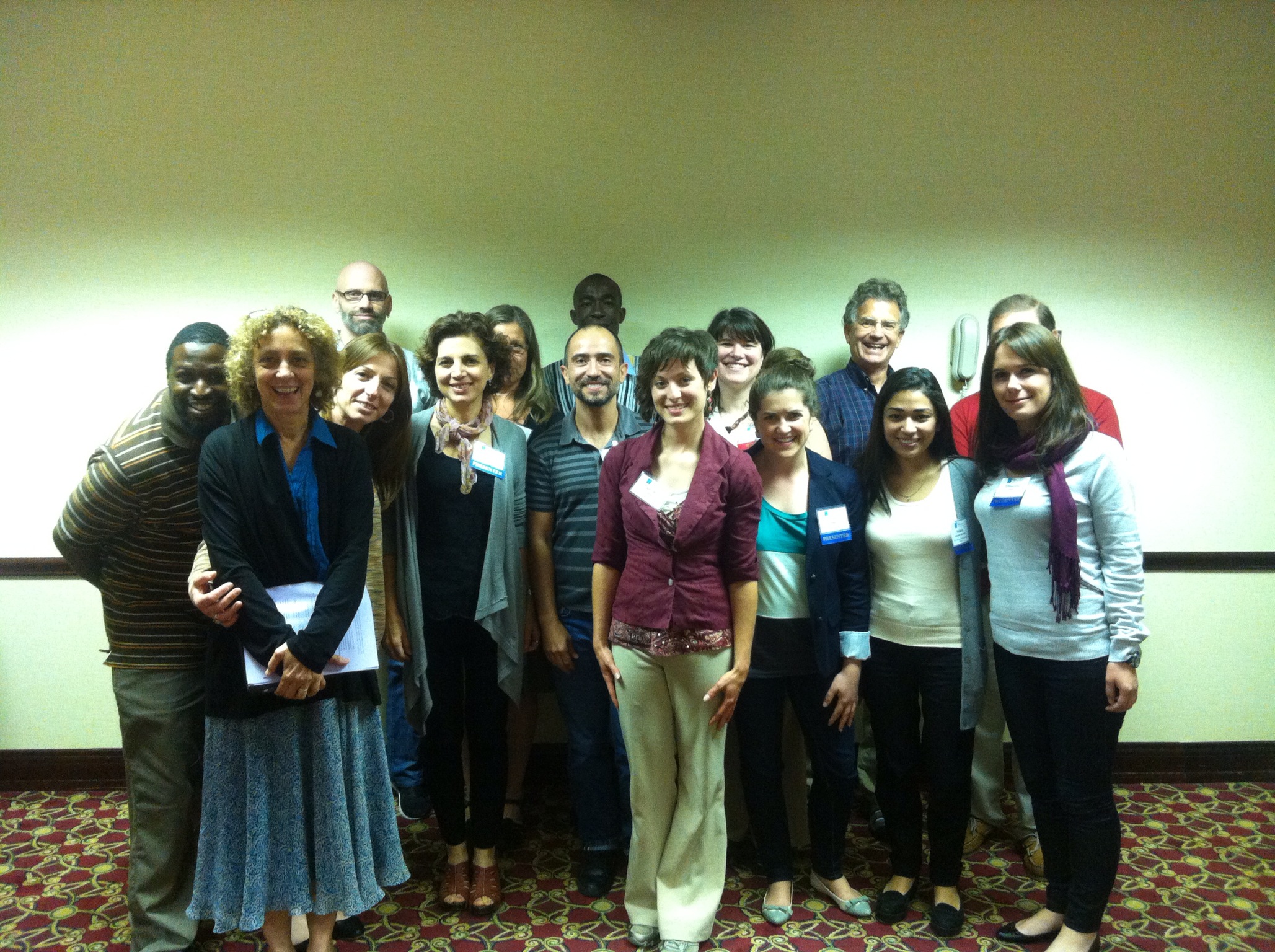
This past Thursday, June 13th, I facilitated a one-day workshop titled, “People Power and Pedagogy: Methods for Teaching Nonviolent Struggle.” There were about 19 participants in the workshop who were all attending pre-conference trainings 7th annual Conflict Resolution Education Conference. This made it one of the most well-attended trainings of the conference. The feedback and comments on the workshop were also very nice to read. Here are a couple quotes from the evaluations:

Daryn managed a very egalitarian structure to the group. No “talking head” behavior. Great material, great activities, great opportunity!

Excellent mix of academic theory and activities. Well prepared, but also flexible. Remained engaged with the group and kept us engaged during this long session. Thank you!

Excellent: interaction, empowerment of participants, Daryn’s presentation skills/ability to clearly articulate info/resources/concepts as well as ensure participants voices understood. Overall facilitation of activities was great.

Continue reading

Featured Article in the Global Campaign for Peace Education Newsletter

GCPENewsletterJune

This month’s issue of the Global Campaign for Peace Education features an article I wrote, The 7 Blossoms of Peace Education. Thanks to Tony Jenkins for providing me with this opportunity. It is an honor to have the chance to share this framework with other peace educators around the world. Continue reading to see the full text of the article and take a look at how I approach and understand my work as a peace educator.

Continue reading

Yamas, Niyamas and Kingian Nonviolence

mlk-22I recently returned from a week-long advanced seminar in Kingian Nonviolence. While I was there I started seeing a lot of connections between principles of Kingian Nonviolence and principles of yoga that my partner, Alyson has been teaching me.

When I got home from this seminar I immediately sat down and read the Yamas and Niyamas, which are two of the eight branches of yoga. Alyson had encouraged me to read about these before attending the seminar and I wish I had because there is a lot of valuable crossover. This post is an email I sent out to the other 9 seminar participants upon returning home and reading the yamas and niyamas.

Continue reading

Advanced Seminar in Kingian Nonviolence

IMG_4649

This past week I participated in a week-long, intensive exploration of Kingian Nonviolence. The concepts, philosophies, and experiences that both informed and grew out of the Civil Rights Movement, helped advance an understanding of nonviolence – an understanding very much rooted in the vision and experimentation Dr. King brought to the struggle, hence the term “Kingian Nonviolence.”  After he was assassinated, those who had worked and organized alongside Dr. King set out to codify Kingian Nonviolence into a curriculum so that it could be carried on to the ensuing generations. This curriculum was developed by two prominent civil rights activists and leaders who worked alongside Dr. King in some of the movement’s most powerful nonviolent campaigns in Nashville, TN, Albany, GA, Chicago, IL and other communities across the US.  These two men are Dr. David Jehnsen and Dr. Bernard Lafayette.

Continue reading